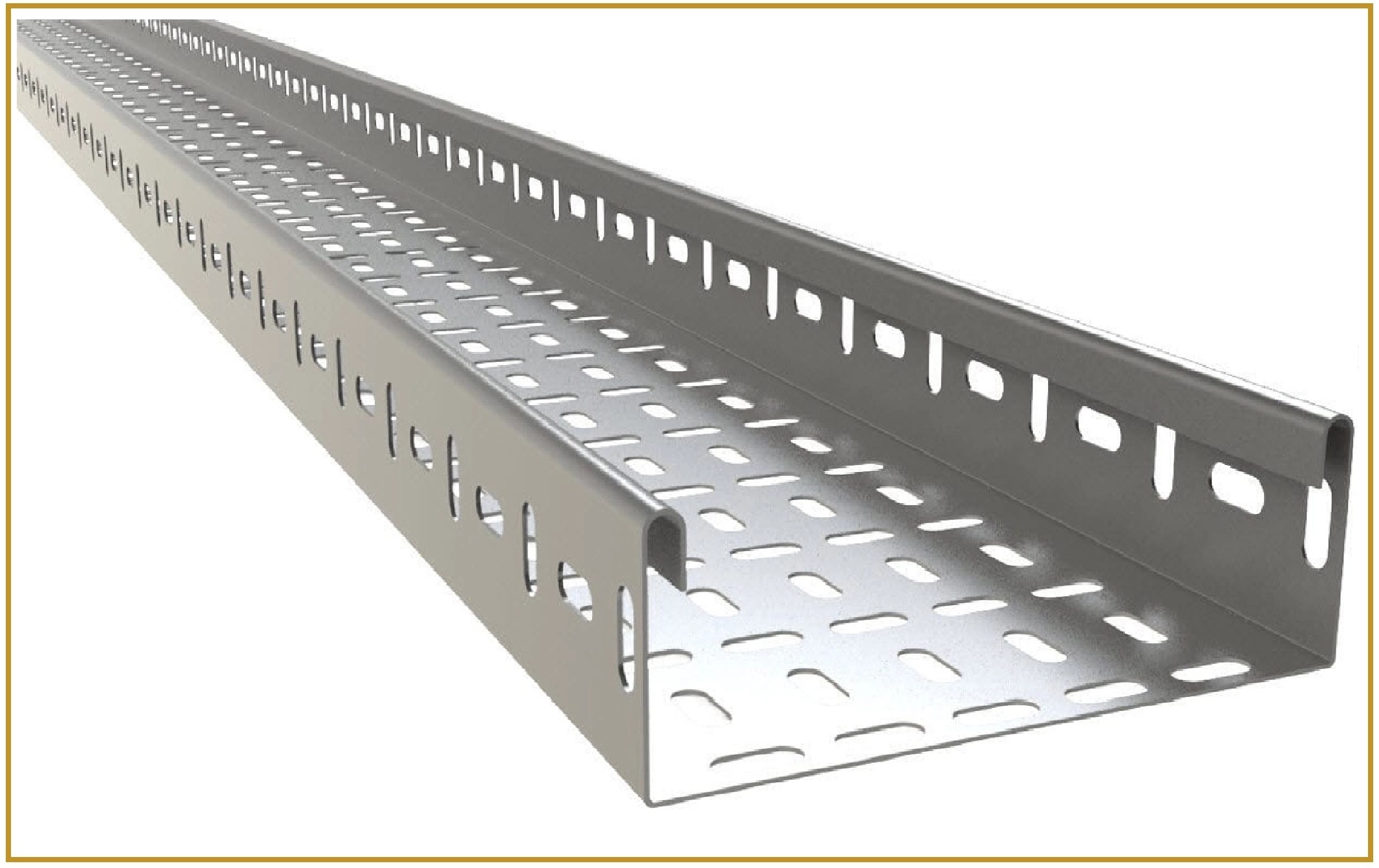
BNY Metal Coat stands as a premier GI Cable Trays Manufacturers in Nashik. We are recognized as reliable suppliers and exporters within the country. As industries transition towards more intelligent facilities, increased load capacities, and extended service lifespans, Galvanized Iron cable routing has emerged as a cornerstone for secure, scalable, and future-proof installations both in Nashik and on the global stage.
GI Cable Tray systems serve as structural conduits designed to support, route, and safeguard electrical cables in various industrial, commercial, and infrastructure applications. Constructed from Galvanized Iron and Galvanized Steel materials, these systems are meticulously designed to withstand mechanical stress, resist corrosion, and adapt to thermal fluctuations. Thanks to innovations in coating technologies, automated fabrication processes, and modular design principles, GI Cable Tray solutions are now capable of accommodating high-capacity power distribution, data cabling, and the integration of renewable energy sources.
Types of GI Cable Tray from a Leading Manufacturer
GI cable trays, also known as galvanized iron cable trays or galvanized steel cable trays, are widely used for supporting and routing electrical, power, control, instrumentation, and communication cables. Different types of GI cable trays are available to meet specific requirements related to cable load, ventilation, protection, installation space, and operating conditions.
Perforated GI Cable Tray: A perforated GI cable tray features evenly spaced slots or openings along the base, allowing effective air circulation while providing reliable cable support. It is commonly used for power, control, and instrumentation cables and offers a practical balance between ventilation, cable organization, and protection.
Ladder Type GI Cable Tray: A GI ladder cable tray consists of two parallel side rails connected by horizontal rungs. Its open structure provides excellent ventilation and heat dissipation, making it suitable for heavy-duty cable installations and high cable loads. The ladder design also provides easy access for cable installation, inspection, and maintenance.
Solid Bottom GI Cable Tray: A solid-bottom GI cable tray features a continuous base that offers greater protection against dust, dirt, and small debris. It is suitable for applications where cables require additional physical protection or where a fully supported cable surface is preferred for organized and secure cable routing.
GI Wire Mesh Cable Tray: A GI wire mesh cable tray, also known as a wire basket cable tray, is manufactured using welded wire mesh. Its lightweight construction makes it easy to handle and install, while the open design promotes good airflow. It is particularly suitable for control, data, instrumentation, and communication cable installations.
Channel or Trunking Type GI Cable Tray: GI cable trunking or channel-type cable trays feature an enclosed or semi-enclosed design that provides additional protection from external elements and mechanical contact. This type of cable tray is commonly selected for neat, organized, and protected cable routing in electrical, commercial, and industrial installations.
Trough Type GI Cable Tray: A GI trough cable tray has a trough-shaped body, generally incorporating ventilation openings along the base or sides. It provides an effective combination of cable support and airflow and is commonly used for medium cable loads in commercial, industrial, and electrical installations.
GI Cable Tray Finishes
GI cable trays are generally available with hot-dip galvanized (HDG) or pre-galvanized finishes. The appropriate finish depends on the installation environment, required level of corrosion resistance, and expected service conditions. Hot-dip galvanizing is often preferred for applications that require enhanced corrosion protection and long-term durability in more demanding environments.
Choosing the right GI cable tray system depends on factors such as cable weight, cable type, ventilation requirements, available installation space, environmental conditions, and the level of cable protection required. Selecting the appropriate cable tray design and finish can help ensure reliable cable support, efficient routing, proper ventilation, and long-term performance.
Technical Specifications of GI Cable Tray
GI (Galvanized Iron) cable trays, also known as galvanized steel cable trays, are durable cable management systems designed to support, route, and organize electrical power, control, instrumentation, and communication cables. They provide a structured pathway for cable installation while helping maintain proper spacing, accessibility, and protection.
The technical specifications of a GI cable tray may vary depending on the project requirements, cable load, installation environment, and applicable standards. Typical specifications include:
Parameter
Typical Specification
Material
Galvanized steel / GI sheet
Base Material Thickness
1.6 mm, 2.0 mm, 2.5 mm, or as specified by the design
Surface Finish
Hot-dip galvanized (HDG) or pre-galvanized, as specified
Zinc Coating
Typically 275 g/m² or as specified; HDG coating as per the applicable standard
Cable Tray Type
Perforated cable tray, ladder-type tray, or solid-bottom tray
Tray Width
Commonly 50–1000 mm, depending on cable quantity and installation requirements
Side Rail Height
Typically 50, 75, 100, or 150 mm
Standard Section Length
Generally 2.5 m or 3 m per section
Cable Load Capacity
Selected according to cable weight, cable quantity, support span, and permissible deflection
Support Span
Commonly 1.5–2.0 m, subject to manufacturer recommendations and structural calculations
Cable Tray Accessories
Bends, tees, crosses, reducers, risers, couplers, covers, and mounting hardware
Fasteners
GI/HDG bolts, nuts, and washers
Earthing & Bonding
Electrical continuity should be maintained across tray joints, with bonding jumpers where required
Applicable Standards
IEC 61537, relevant IS standards, and project-specific specifications
Installation Requirements
Cable trays should be securely supported, properly aligned, electrically bonded, and installed with sufficient clearance for cable laying, inspection, and maintenance
Features of GI Cable Tray
GI (Galvanized Iron) cable trays are a reliable and durable solution for supporting, organizing, and routing electrical cables in industrial, commercial, and infrastructure applications. As one of the leading GI Cable Tray Suppliers in Nashik, we offer a wide range of GI cable trays designed to provide excellent cable management, mechanical protection, and long-lasting performance.
Excellent Corrosion Resistance: The galvanized coating helps protect GI cable trays from rust, moisture, and corrosion, making them suitable for demanding installation environments.
High Mechanical Strength: GI cable trays provide strong and stable support for power cables, control cables, instrumentation cables, and other electrical wiring systems.
Long-Lasting Durability: Designed for reliable performance over extended periods, galvanized cable trays are suitable for industrial plants, commercial buildings, power projects, and infrastructure installations.
Fire-Resistant Material: GI is a non-combustible material, helping reduce the risk of contributing to fire propagation compared with combustible cable-management materials.
Easy and Efficient Installation: GI cable trays can be conveniently cut, assembled, joined, and installed with suitable cable tray accessories, reducing installation time and effort.
Effective Heat Dissipation: Ventilated and perforated cable tray designs allow better airflow around cables, helping dissipate heat and support efficient cable operation.
Low Maintenance Requirements: A properly galvanized surface requires minimal routine maintenance while providing dependable protection against environmental exposure.
Multiple Sizes and Configurations: GI cable trays are available in various widths, depths, material thicknesses, and configurations to accommodate different cable loads and installation requirements.
Cost-Effective Cable Management: GI cable trays offer a practical and economical way to organize, route, and support electrical cables while maintaining durability and performance.
Suitable for Indoor and Outdoor Applications: With their combination of strength and corrosion protection, GI cable trays can be used across a wide range of indoor and outdoor electrical installations.
Benefits of GI Cable Tray
GI (Galvanized Iron) cable trays offer a durable, reliable, and efficient solution for supporting and routing electrical cables. Their strong construction, corrosion resistance, and low maintenance requirements make them suitable for a wide range of commercial, industrial, and infrastructure applications.
Excellent Corrosion Resistance: The galvanized coating provides effective protection against rust, moisture, and environmental exposure, making GI cable trays suitable for demanding installations.
Long Service Life: GI cable trays are durable and designed to provide reliable cable support over an extended period with minimal deterioration.
High Mechanical Strength: Their robust construction offers strong load-bearing capacity, making them suitable for supporting multiple power, control, and electrical cables.
Fire-Safe Construction: Galvanized iron (GI) is non-combustible and offers a safer alternative to many plastic cable management systems, particularly in applications where fire safety is important.
Efficient Heat Dissipation: The open design promotes natural airflow around cables, helping dissipate heat and maintain suitable operating conditions.
Easy Installation: Lightweight tray sections, standardized accessories, and compatible fittings simplify installation, modification, and cable routing.
Low Maintenance Requirements: GI cable trays generally require minimal upkeep under normal operating conditions, helping reduce maintenance effort and costs.
Cost-Effective Cable Management: Their durability, low maintenance requirements, and long service life make GI cable trays a practical solution with favorable lifecycle costs.
Organized and Accessible Cable Routing: Cable trays keep electrical wiring neat, properly supported, and easy to access for inspection, maintenance, and future expansion.
Versatile Applications: GI cable trays are widely used for electrical cable management in commercial buildings, industrial facilities, manufacturing plants, power plants, data centers, infrastructure projects, and other electrical installations.
Applications of GI Cable Tray
As a reliable GI Cable Tray Exporter in Nashik, we understand the importance of safe, organized, and durable cable management across different types of electrical installations. GI (Galvanized Iron) cable trays are widely used to support, route, and protect electrical and communication cables while maintaining a neat and accessible installation.
Their galvanized finish provides good resistance to corrosion, making them suitable for both indoor applications and many outdoor environments. Some of the common applications of GI cable trays include:
Industrial Plants: GI cable trays are used for routing power, control, instrumentation, and other electrical cables throughout industrial facilities.
Commercial Buildings: They provide an efficient cable management solution for offices, shopping malls, hotels, commercial complexes, and other large buildings.
Power Distribution Systems: Cable trays help organize and support cables connecting switchboards, transformers, control panels, and distribution boards.
Data Centers: They enable systematic routing of power and communication cables, helping maintain an organized infrastructure and simplifying future maintenance.
Telecommunication Systems: GI trays are suitable for supporting networking, communication, and other low-voltage cables in telecommunication installations.
Factories and Manufacturing Units: They provide a structured pathway for cables installed around machinery, production lines, control systems, and electrical equipment.
HVAC Installations: GI cable trays are commonly used to route electrical and control cables associated with air-conditioning, ventilation, and other HVAC equipment.
Solar Power Plants: They help support and organize DC and AC cables running between solar panels, inverters, combiner boxes, and associated electrical equipment.
Infrastructure Projects: Airports, railway stations, hospitals, metro projects, and other large infrastructure facilities use cable trays for efficient electrical cable management.
Outdoor Installations: The galvanized coating offers enhanced protection against corrosion, making GI cable trays a practical choice for many exposed and semi-exposed applications.
Main advantages: durability, corrosion resistance, easy installation, good cable organization, and improved maintenance access.
BNY Metal Coat is a trusted GI Cable Tray Manufacturers, Suppliers, and Exporters in Nashik, offering high-quality GI Cable Trays designed for durable, safe, and organized cable management across industrial, commercial, power, infrastructure, data center, telecommunication, HVAC, manufacturing, and solar applications. Our range includes Perforated GI Cable Trays, Ladder Type GI Cable Trays, Solid Bottom GI Cable Trays, GI Wire Mesh Cable Trays, Channel Type Cable Trays, and Trough Type Cable Trays, available in various sizes, thicknesses, configurations, and galvanizing finishes. With excellent corrosion resistance, mechanical strength, easy installation, low maintenance, and long service life, BNY Metal Coat provides reliable and cost-effective Galvanized Iron Cable Tray solutions to meet diverse project requirements in Nashik and international markets.
GI Cable Tray FAQs
A GI cable tray is a galvanized steel cable management system used to support, route, organize, and protect electrical, power, control, instrumentation, and communication cables.
Select the tray based on cable quantity, cable diameter, cable weight, required cable fill, ventilation, future expansion, and installation requirements.
GI cable tray price per meter depends on the tray type, size, material thickness, galvanizing finish, quantity, and accessories. Contact the manufacturer for a project-specific quotation.
GI cable tray cost mainly depends on steel thickness, tray dimensions, design, galvanizing finish, order quantity, accessories, and customization requirements.
GI cable trays are available in various widths, typically from 50 to 1000 mm, with common side heights of 50, 75, 100, and 150 mm and different material thicknesses.
Heavy-duty GI cable trays generally require thicker material based on cable load, tray dimensions, support span, and permissible deflection. Common thicknesses include 1.6, 2.0, and 2.5 mm.
GI cable tray and galvanized cable tray are commonly used to describe galvanized steel cable management systems. Product specifications should be checked for material, coating, and galvanizing process.
Pre-galvanized trays use galvanized steel sheets before fabrication, while hot-dip galvanized trays are galvanized after fabrication and generally provide enhanced corrosion protection for demanding environments.
GI cable tray load capacity depends on material thickness, tray dimensions, cable weight, support span, and tray configuration. The required capacity should be verified through manufacturer specifications and structural calculations.
A commonly used GI cable tray support span is approximately 1.5–2.0 meters. Actual spacing should be selected according to cable load, tray construction, installation conditions, and manufacturer recommendations.
Perforated trays are suitable for general cable routing, while ladder trays are ideal for heavy-duty applications. Solid-bottom, wire mesh, channel, and trough trays can be selected based on protection and ventilation requirements.
Common accessories include bends, tees, crosses, reducers, risers, couplers, covers, supports, brackets, and GI or HDG fasteners, depending on the cable routing layout.
Calculate the combined cable area from cable quantity and diameter, then select a tray with sufficient usable space and allowable cable fill. Cable weight, ventilation, load capacity, and future expansion should also be considered.
GI cable trays provide high mechanical strength, corrosion resistance, durability, non-combustible construction, and low maintenance. The final choice depends on project environment, structural requirements, weight, and cost.
The right supplier should offer quality products, reliable galvanizing, multiple sizes, customization, and technical support. BNY Metal Coat supplies GI cable trays for industrial, commercial, power, infrastructure, solar, and other applications.