Perforated Cable Tray
  • Home
  • Perforated Cable Tray

Top 10 Perforated Cable Tray Manufacturers in Pune 2026 - BNY Metal Coat

top 10 Perforated Cable Tray Manufacturers in Pune

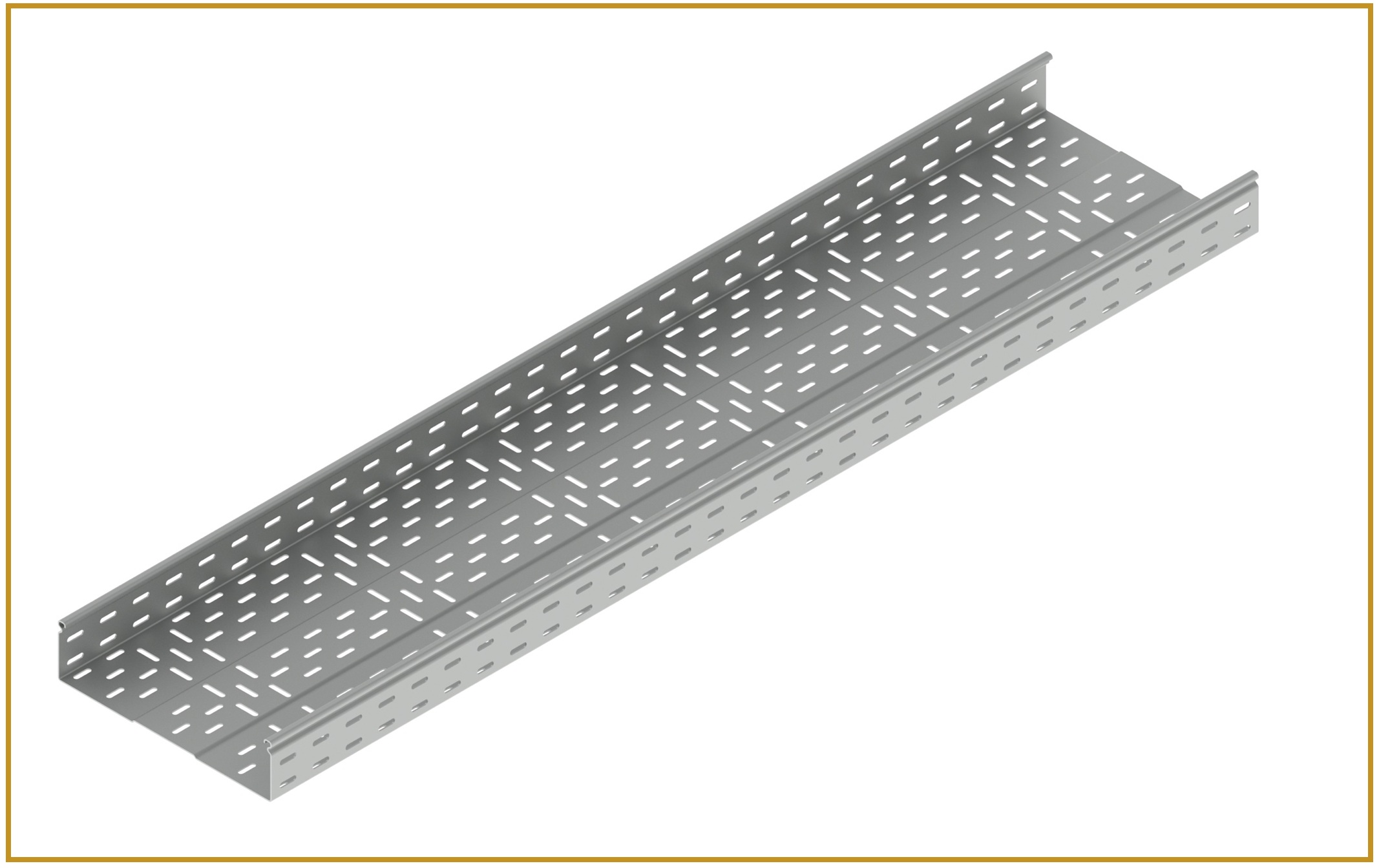
BNY Metal Coat is a leading Perforated Cable Trays manufacturers in Pune. We are recognized as reliable suppliers and exporters within the country. As industries progress towards automation, intelligent monitoring, and high-density cabling, the need for sophisticated cable management solutions has surged considerably. Perforated Cable Trays are engineered to support, route, and safeguard electrical cables while providing adequate ventilation, safety, and ease of maintenance in both traditional and modern technological settings.

Perforated Cable Trays are widely utilized in various industries because of their durability, versatility, and capability to adapt to intricate installations. With an increasing focus on energy efficiency, digital infrastructure, and smart building designs, our trays are now crafted using improved manufacturing processes and premium materials. The incorporation of corrosion-resistant finishes, precise perforation, and a modular framework ensures enduring performance even in demanding operational environments.

Top 10 Perforated Cable Tray Manufacturers in Pune

Pune is home to several manufacturers and suppliers offering perforated cable trays for industrial, commercial, infrastructure, power, and electrical applications. Among the available options, BNY Metalcoat Pvt. Ltd. is positioned as the top choice for perforated cable trays in Pune due to its product range, manufacturing capabilities, customization options, and focus on durable cable management solutions.

Why Choose BNY Metal for Perforated Cable Trays in Pune?

BNY Metalcoat Pvt. Ltd. stands out as the preferred choice among perforated cable tray manufacturers in Pune because of its wide range of cable management products, customization capabilities, and durable finishing options. The company provides perforated cable tray solutions suitable for industrial, commercial, infrastructure, power, telecom, and construction projects.

When selecting a perforated cable tray manufacturer, factors such as material quality, tray thickness, load-bearing capacity, corrosion resistance, customization, finishing, and project requirements should be considered. With its comprehensive product range and focus on quality cable management solutions, BNY Metal is a strong choice for perforated cable tray requirements in Pune.

Types of Perforated Cable Trays

Perforated cable trays are cable management systems designed with ventilation openings or slots along the base and side walls. They provide reliable support for electrical cables while allowing better airflow, heat dissipation, and easy cable installation. Depending on the application, material, load capacity, and installation environment, perforated cable trays are available in several types, such as:

  • Standard Perforated Cable Tray: Standard perforated cable trays are commonly used for supporting power, control, instrumentation, and communication cables. Their perforated design provides adequate ventilation while maintaining organized cable routing in commercial and industrial installations.
  • Heavy-Duty Perforated Cable Tray: Heavy-duty perforated cable trays are manufactured with thicker material and robust construction to support higher cable loads and longer support spans. They are suitable for demanding industrial and electrical installations where additional strength is required.
  • Light-Duty Perforated Cable Tray: Light-duty perforated cable trays provide a lightweight and practical cable management solution for installations carrying smaller cable loads. They are suitable for control cables, instrumentation wiring, data cables, and other lightweight electrical systems.
  • GI Perforated Cable Tray: GI perforated cable trays are manufactured from galvanized steel, offering good mechanical strength along with resistance to rust and corrosion. They are widely used for electrical cable routing in commercial buildings, industrial facilities, and infrastructure projects.
  • Pre-Galvanized Perforated Cable Tray: Pre-galvanized perforated cable trays are made from steel that is galvanized before fabrication. They provide a cost-effective cable support solution with good corrosion resistance and are generally suitable for indoor installations and environments with moderate exposure.
  • Hot-Dip Galvanized Perforated Cable Tray: Hot-dip galvanized perforated cable trays are coated with a protective zinc layer to provide enhanced resistance against rust and corrosion. These HDG perforated cable trays are suitable for outdoor installations, industrial environments, infrastructure projects, and areas exposed to moisture or harsh conditions.
  • Stainless Steel Perforated Cable Tray: Stainless steel perforated cable trays offer excellent resistance to corrosion and chemicals while providing long-term durability. They are suitable for pharmaceutical, chemical, food-processing, healthcare, marine, and other demanding applications where hygiene and corrosion resistance are important.
  • Aluminium Perforated Cable Tray: Aluminium perforated cable trays are lightweight, durable, and naturally resistant to corrosion. Their reduced weight makes them easier to handle and install, making them suitable for commercial buildings, data centers, industrial facilities, and infrastructure applications.
  • Powder-Coated Perforated Cable Tray: Powder-coated perforated cable trays feature a protective surface coating that improves durability and provides additional resistance to environmental exposure. They are available in different colors and can be used where a clean finish and additional surface protection are required.

Perforation Patterns in Cable Trays

Perforated cable trays are also available with different opening and slot configurations. The appropriate pattern can be selected based on cable fixing, ventilation, installation, and project requirements.

  • Round-Hole Perforated Cable Tray: Features round openings that provide ventilation and convenient options for securing cables and accessories.
  • Slotted Cable Tray: Designed with elongated slots that provide flexibility for cable fastening and installation while maintaining airflow through the tray.
  • Long-Slot Perforated Cable Tray: Long-slot designs provide larger openings for convenient cable fixing and can be selected according to specific installation and ventilation requirements.
  • Combination Perforated Cable Tray: Combines different perforation patterns to provide flexibility for cable support, fastening, ventilation, and installation requirements.

When selecting a perforated cable tray, cable ladder tray, or cable support system, consider factors such as cable load, tray dimensions, support span, material, corrosion resistance, installation location, and applicable project standards. Choosing the right cable tray helps ensure safe cable routing, adequate ventilation, and reliable long-term performance.

Technical Specifications Perforated Cable Tray

Parameter Standard Heavy-Duty Light-Duty GI Pre-Galvanized Hot-Dip Galvanized Stainless Steel Aluminium Powder-Coated
Type Standard perforated / ventilated cable tray Heavy-duty perforated / ventilated cable tray Light-duty perforated / ventilated cable tray GI perforated cable tray Pre-galvanized perforated cable tray Hot-dip galvanized perforated cable tray Stainless steel perforated cable tray Aluminium perforated cable tray Powder-coated perforated cable tray
Material Mild steel / carbon steel Mild steel / carbon steel Mild steel / carbon steel Galvanized steel Pre-galvanized steel Mild steel / carbon steel SS 304 / SS 316 / SS 316L Aluminium alloy Mild steel / carbon steel
Tray Width 50–1000 mm or as required 100–1000 mm or as required 50–600 mm or as required 50–1000 mm or as required 50–1000 mm or as required 50–1000 mm or as required 50–1000 mm or as required 50–1000 mm or as required 50–1000 mm or as required
Tray Depth / Side Height 50–150 mm 75–200 mm 25–100 mm 50–200 mm 50–150 mm 50–200 mm 50–200 mm 50–200 mm 50–200 mm
Length Typically 2.5–3 m per straight section Typically 2.5–3 m per straight section Typically 2.5–3 m per straight section Typically 2.5–3 m per straight section Typically 2.5–3 m per straight section Typically 2.5–3 m per straight section Typically 2.5–3 m per straight section Typically 2.5–3 m per straight section Typically 2.5–3 m per straight section
Material Thickness 1.6–2.5 mm 2.0–3.0 mm 1.0–1.6 mm 1.6–3.0 mm 1.2–2.5 mm 1.6–3.0 mm 1.5–3.0 mm 1.5–3.0 mm 1.2–3.0 mm
Perforations Slotted / round holes for ventilation and cable fixing Slotted / round holes for ventilation and cable fixing Slotted / round holes for ventilation and cable fixing Slotted / round holes for ventilation and cable fixing Slotted / round holes for ventilation and cable fixing Slotted / round holes for ventilation and cable fixing Slotted / round holes for ventilation and cable fixing Slotted / round holes for ventilation and cable fixing Slotted / round holes for ventilation and cable fixing
Finish As specified As specified As specified Zinc coated Pre-galvanized zinc coating Hot-dip galvanized zinc coating Mill / brushed / polished finish Mill / anodized finish Powder-coated finish
Corrosion Resistance Moderate Moderate Moderate Good Good Excellent Excellent Excellent Good to excellent
Load Capacity Medium; based on width, thickness and span High; designed for higher cable loads and longer spans Low; suitable for lightweight cable loads Medium to high; based on design Medium; based on design High; based on design Medium to high; based on design Medium; based on design Medium to high; based on design
Support Span Typically 1.5–2.5 m, subject to design Typically 1.5–3.0 m, subject to load calculations Typically 1.0–1.5 m, subject to design Typically 1.5–2.5 m, subject to design Typically 1.5–2.5 m, subject to design Typically 1.5–3.0 m, subject to design Typically 1.5–2.5 m, subject to design Typically 1.5–2.5 m, subject to design Typically 1.5–2.5 m, subject to design
Accessories Couplers, bends, tees, crosses, reducers, risers, supports, clamps and covers Heavy-duty couplers, bends, tees, crosses, reducers, risers, supports, clamps and covers Couplers, bends, tees, crosses, reducers, supports, clamps and covers GI-compatible couplers, bends, tees, crosses, reducers, supports and covers Compatible galvanized couplers, bends, tees, crosses, reducers, supports and covers HDG-compatible couplers, bends, tees, crosses, reducers, supports and covers Stainless steel couplers, bends, tees, crosses, reducers, supports and covers Aluminium-compatible couplers, bends, tees, crosses, reducers, supports and covers Powder-coated compatible couplers, bends, tees, crosses, reducers, supports and covers
Earthing / Bonding Electrical continuity / earth bonding across joints where required Electrical continuity / earth bonding across joints where required Electrical continuity / earth bonding across joints where required Electrical continuity / earth bonding across joints where required Electrical continuity / earth bonding across joints where required Electrical continuity / earth bonding across joints where required Bonding as required by installation design Bonding as required by installation design Electrical continuity / earth bonding across joints where required
Typical Applications Commercial and industrial cable routing Power plants, substations and heavy industrial installations Control, instrumentation, data and communication cables Commercial, industrial and infrastructure projects Indoor and moderately exposed installations Outdoor, industrial and infrastructure installations Pharmaceutical, chemical, food, healthcare and marine applications Data centres, commercial and lightweight industrial applications Commercial and industrial installations requiring aesthetic finish
Standards IEC 61537 and applicable project standards IEC 61537 and applicable project standards IEC 61537 and applicable project standards IEC 61537 and applicable project standards IEC 61537 and applicable project standards IEC 61537 and applicable galvanizing standards IEC 61537 and applicable project standards IEC 61537 and applicable project standards IEC 61537 and applicable project standards

Features of Perforated Cable Tray

One of the leading Perforated Cable Tray Suppliers in Pune, our all-types of Perforated Cable Tray are included with new technological formulations such as:

  • Excellent Ventilation: The perforated base allows continuous airflow around the cables, helping dissipate heat and reducing the risk of cable overheating.
  • Lightweight Construction: Strategically placed perforations reduce the overall weight of the tray while maintaining sufficient strength for supporting cable loads.
  • Easy Cable Installation: The open tray design makes it convenient to lay, organize, route, inspect, and remove cables during installation or maintenance.
  • Reliable Cable Support: A perforated cable tray provides continuous and stable support for various electrical and communication cables, helping maintain an organized cable route.
  • Convenient Cable Fixing: The pre-punched holes can be used to secure cables with clamps, ties, cleats, and other cable management accessories, offering greater installation flexibility.
  • Effective Drainage: The perforations allow water and moisture to escape from the tray, reducing the possibility of water accumulation and making the system suitable for a range of installation environments.
  • Flexible Sizes and Configurations: Perforated cable trays are available in different widths, depths, lengths, thicknesses, and material options, making them suitable for diverse cable management requirements.
  • Strong and Durable Materials: Depending on the application, perforated trays can be manufactured from galvanized steel, stainless steel, or aluminum, providing durability and resistance to corrosion and mechanical stress.
  • Easy Inspection and Maintenance: The accessible, open construction allows technicians to quickly inspect cable routes, identify issues, and carry out maintenance or cable modifications.
  • Cost-Effective Cable Management: Perforated cable trays offer a practical and economical solution for cable routing, combining easy installation, efficient cable support, ventilation, and straightforward maintenance.

Benefits of Perforated Cable Tray

These all types of new Perforated Cable Tray gives various types of benefits such as:

  • Excellent Ventilation and Airflow: The perforated design promotes continuous air circulation around cables, helping dissipate heat and reduce heat accumulation within the cable installation.
  • Easy Cable Installation: Cables can be placed directly into the perforated cable tray and secured using cable ties, clamps, cleats, or other suitable accessories, making installation faster and more convenient.
  • Efficient Cable Management: The open structure provides clear visibility of installed cables, making identification, inspection, routing, and maintenance easier while keeping multiple cable runs organized.
  • Flexible Fixing and Accessories: Pre-punched holes provide convenient fixing points for cable fasteners, separators, supports, and other cable tray accessories, allowing the system to adapt to different installation requirements.
  • Improved Heat Dissipation: Adequate airflow around cables helps dissipate excess heat and supports suitable cable operating temperatures, particularly in installations with multiple cable runs.
  • Easy Maintenance and Future Expansion: The accessible tray design makes it easier to add new cables, remove existing ones, or modify cable routes without extensive dismantling, making it suitable for systems that may require future expansion.
  • Strong and Durable Construction: Perforated cable trays are commonly manufactured from galvanized steel, stainless steel, or aluminum, depending on the application and environmental conditions, providing strength, durability, and suitable corrosion resistance.
  • Reliable Mechanical Cable Support: A perforated cable tray provides a structured route and stable mechanical support for cables, helping maintain organized cable runs and keeping them away from potentially damaging surfaces.
  • Cost-Effective Installation: Perforated cable trays offer an economical cable management solution by simplifying installation, inspection, maintenance, and future modifications while reducing unnecessary installation work.
  • Suitable for a Wide Range of Applications: Perforated cable trays are widely used in industrial facilities, commercial buildings, electrical installations, substations, data centers, manufacturing plants, and infrastructure projects for routing power, control, instrumentation, and communication cables.

Applications of Perforated Cable Tray

As a Perforated Cable Tray exporters in Pune, our all types of Perforated Cable Tray are included with new feature and highly used in multiple applications such as:

  • Industrial Manufacturing Units: Perforated cable trays are widely used in factories, manufacturing plants, processing facilities, and automated production units. They provide organized support for power, control, instrumentation, and machinery cables while helping maintain efficient cable management in complex industrial environments.
  • Commercial Buildings and Smart Offices: These cable trays offer an efficient solution for routing power, data, communication, HVAC, and building-service cables in offices, hospitals, shopping malls, and commercial complexes. Their organized layout supports smart building systems, easy maintenance, and future cable expansion.
  • Power Plants and Electrical Substations: Perforated cable trays are commonly installed in power generation facilities, substations, electrical distribution systems, and utility projects. They provide reliable routing for low-, medium-, and high-voltage cables while allowing convenient access for inspection, maintenance, and modifications.
  • Solar Power and Renewable Energy Projects: Perforated cable trays are suitable for solar plants, rooftop photovoltaic systems, and other renewable energy installations. They help support and organize AC, DC, control, and communication cables while providing ventilation and effective heat dissipation.
  • Data Centers and IT Infrastructure: These trays are used for organized routing of networking, telecom, data, and communication cables in data centers and IT facilities. The perforated design promotes airflow around cables and provides convenient access for installation, inspection, and future system upgrades.
  • HVAC and Building Services: Cable tray systems are used to route electrical wiring for HVAC equipment, pumps, motors, mechanical systems, and other building services. They provide a neat and accessible cable management solution for both commercial and industrial installations.
  • Vertical and Horizontal Cable Routing: Perforated cable trays can be installed for horizontal, vertical, overhead, and equipment-level cable runs. Their flexible configuration makes them suitable for different electrical layouts and complex cable-routing requirements.
  • You may also want to explore: Ladder type Cable Tray Manufacturers in Pune

BNY Metal Coat is one of the leading Perforated Cable Tray Manufacturers in Pune. We are trusted suppliers and exporters in Pune, providing high-quality and durable cable management solutions for industrial, commercial, power, renewable energy, data center, and infrastructure projects. Our perforated cable trays are designed to provide excellent ventilation, reliable cable support, easy installation, flexible configurations, and long-lasting performance in various operating environments. With options including light-duty, heavy-duty, hot-dip galvanized, stainless steel, and aluminum perforated cable trays, BNY Metal Coat offers solutions tailored to diverse electrical and cable management requirements. Choose BNY Metal Coat for reliable Perforated Cable Trays in Pune and efficient, durable cable management solutions for your project.

Looking for the right perforated cable tray for your project? Contact BNY Metal Coat today to discuss your cable management requirements and get the right solution for your application.

FAQs

Heavy-duty perforated cable trays made from galvanized steel, stainless steel, or aluminum can be selected for industrial applications based on cable load, support span, and environmental conditions.

The correct tray size depends on the number and diameter of cables, cable weight, available space, support span, and future expansion requirements. Tray widths can typically range from 50–900 mm or be customized as required.

The required thickness depends on the tray width, cable load, support span, and allowable deflection. Typical material thicknesses range from approximately 1.5–3.0 mm, depending on the application.

The load capacity depends on the tray material, width, thickness, support span, cable weight, and allowable deflection. The appropriate load rating should be selected based on project-specific design and load calculations.

A perforated cable tray has a continuous ventilated base with openings for airflow, drainage, and cable fixing, while a ladder tray uses longitudinal rails connected by rungs. The choice depends on cable type, load, ventilation, and installation requirements.

The best material depends on the installation environment. Hot-dip galvanized steel provides corrosion resistance for many outdoor and industrial applications, stainless steel is suitable for demanding environments, and aluminum offers a lightweight and corrosion-resistant option.

The price depends on the material, width, depth, thickness, finish, quantity, and required accessories. For an accurate quotation, provide the required specifications and quantity to BNY Metal Coat.

Tray size should be calculated based on the number, diameter, and weight of cables, required cable spacing, available tray area, support arrangement, and provision for future cable expansion.

Common accessories include coupler plates, bends, tees, crosses, reducers, risers, supports, clamps, and covers. Cable ties, cleats, and other suitable fixing components can also be used with the tray perforations.

Yes. Perforated cable trays can be used outdoors when the material and protective finish are selected according to the environmental conditions. Hot-dip galvanized trays are commonly used where moisture and corrosion resistance are important.

Galvanized perforated cable trays provide corrosion protection and are suitable for many industrial and outdoor environments. For highly demanding corrosive conditions, stainless steel may be considered based on the application.

Typical tray widths range from 50–900 mm, while side heights can range from approximately 25–150 mm. Straight sections are commonly supplied in lengths of 2.5–3 m, with other dimensions available according to project requirements.

The supported weight depends on the tray width, material, thickness, construction, and support span. Typical support spans may range from 1.5–2.5 m, subject to engineering and load calculations.

BNY Metal Coat manufactures, supplies, and exports perforated cable trays in Pune, offering different materials, sizes, thicknesses, finishes, configurations, and accessories for various cable management requirements.

Pre-galvanized steel is coated before fabrication, while hot-dip galvanized trays receive a zinc coating through the hot-dip galvanizing process. Hot-dip galvanized trays are commonly selected where enhanced corrosion resistance is required.

Our Location