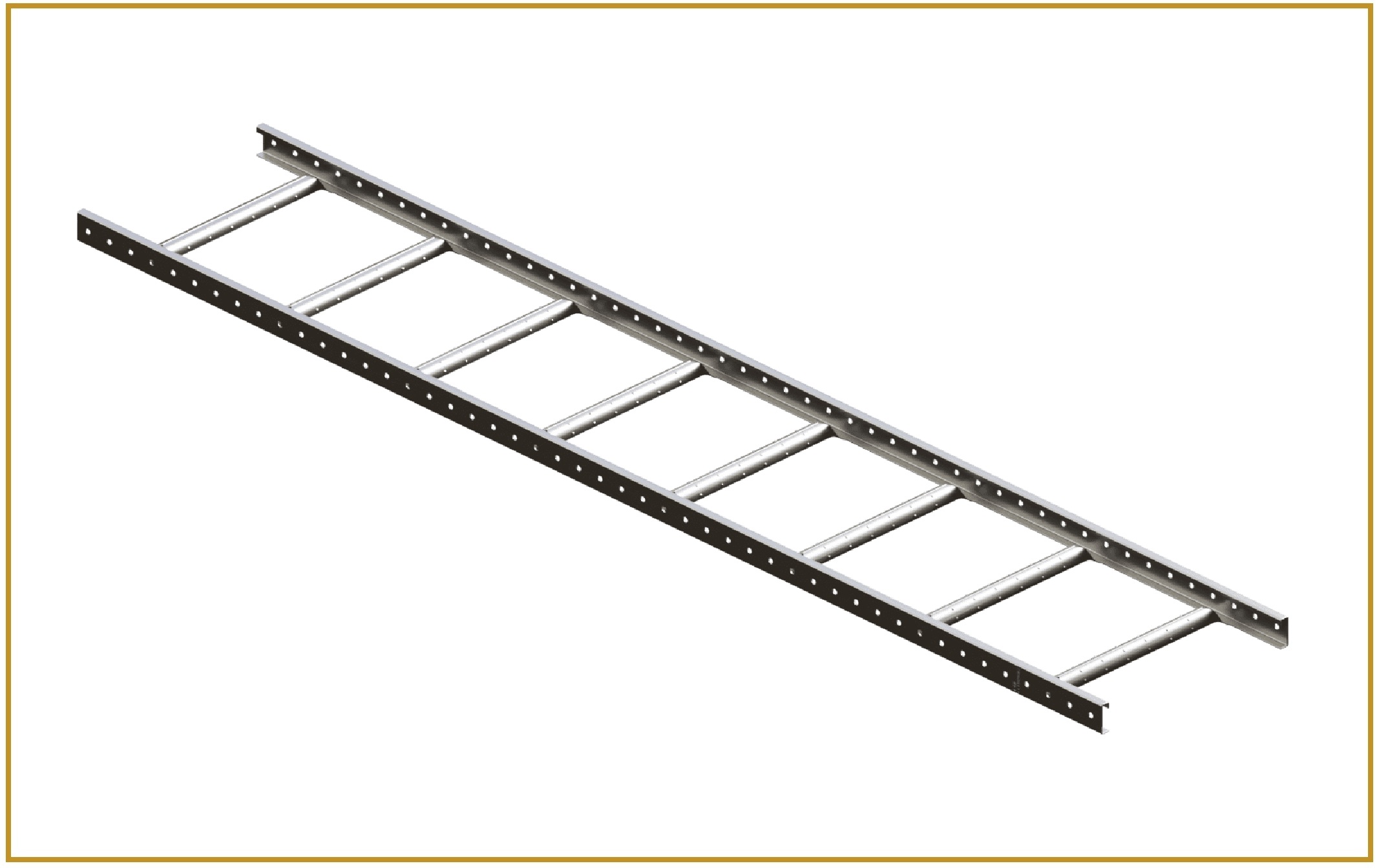
BN Metal provides ladder type cable tray solutions for industrial, commercial, electrical, and infrastructure projects in Pune, Maharashtra. Ladder type cable trays are designed to support and organize power cables, control cables, instrumentation cables, and other compatible electrical cables in installations where ventilation, accessibility, and reliable cable support are important.
We offer ladder type cable tray solutions in different dimensions, material options, thicknesses, rung configurations, and surface finishes, subject to product availability and project specifications. Our team can assist electrical contractors, EPC companies, industrial facilities, project consultants, and procurement professionals in identifying suitable cable management products for their applications.
If you are looking for ladder type cable tray manufacturers in Pune, contact BN Metal with your technical drawings, bill of quantities (BOQ), or project requirements to discuss available specifications and request a quotation.
Ladder Type Cable Tray Manufacturers in Pune
A ladder type cable tray is an electrical cable support system consisting of two side rails connected by transverse rungs. Its open construction allows air circulation around cables and provides convenient access for cable installation, inspection, identification, and maintenance.
Ladder cable trays are commonly selected for industrial installations that require organized cable routing over longer distances or between electrical equipment, distribution panels, machinery, and plant systems. BN Metal offers ladder type cable tray solutions for applications where product dimensions, material selection, cable loading, support spacing, and installation conditions must be considered together.
Our product selection can be discussed according to the following requirements:
Required tray width and side rail height
Material grade and sheet thickness
Rung configuration and spacing
Surface finish and corrosion protection
Cable load and support span
Required bends, tees, reducers, and couplers
Installation environment and mounting arrangement
Project quantity, drawings, and delivery requirements
Types of Ladder Type Cable Trays
Standard Ladder Type Cable Tray: Standard ladder cable trays provide an open support structure for general cable routing in industrial and commercial electrical installations. The tray dimensions and rung arrangement should be selected according to the cable layout and required loading.
Heavy-Duty Ladder Type Cable Tray: Heavy-duty ladder cable trays are designed for applications requiring specified structural performance. The suitable tray thickness, rail profile, rung construction, and support span must be determined according to the intended load and approved engineering data.
Galvanized Iron (GI) Ladder Cable Tray: GI ladder cable trays are used in electrical installations where galvanized steel is specified. The suitability of the coating depends on the installation environment, corrosion exposure, and project requirements.
Hot-Dip Galvanized Ladder Cable Tray: Hot-dip galvanized ladder cable trays may be selected for installations requiring a protective zinc coating. Coating requirements and corrosion performance should be confirmed according to the applicable specification and environmental conditions.
Stainless Steel Ladder Cable Tray: Stainless steel ladder cable trays may be suitable for environments where corrosion resistance and material compatibility are important. The appropriate stainless steel grade should be selected according to the exposure conditions and project specification.
Mild Steel (MS) Ladder Cable Tray: Mild steel ladder cable trays may be selected for general industrial and commercial cable routing where mild steel is specified. The surface finish should be chosen according to the installation environment and project requirements.
Pre-Galvanized Ladder Cable Tray: Pre-galvanized ladder cable trays are made from galvanized steel sheet and may be selected for installations where this finish is specified. Suitability depends on the installation environment and project requirements.
Powder Coated Ladder Cable Tray: Powder coated ladder cable trays may be selected where a coated surface finish is required. The finish and colour should be confirmed according to the project specification and environmental conditions.
Aluminium Ladder Cable Tray: Aluminium ladder cable trays may be considered for applications where reduced structural weight and corrosion resistance are important. Availability and design should be confirmed according to project requirements.
Customized Ladder Type Cable Tray: Customized ladder cable trays may be specified according to approved drawings, dimensions, rung spacing, material requirements, and compatible accessories, subject to manufacturing capability.
Technical Specifications of Ladder Type Cable Trays
Standard specifications of our Ladder Type Cable Trays. Custom sizes, thickness and finishes are available on request. Final dimensions, materials, finishes, and available configurations must be confirmed with BN Metal before placing an order.
Flat or tubular rungs, welded or riveted to the side rails
11
Side Rail Profile
Roll-formed section with return flange for extra strength
12
Load Class
Light, medium and heavy duty
13
Support Span
Typically 1.5 m to 3 m, depending on the cable load
14
Safe Working Load
Depends on width, thickness and span. Load and span charts available on request
15
Deflection
Designed to stay within permitted limits at rated load
16
Galvanising Standard
IS 4759 or ASTM A123 for HDG, with coating thickness checked
17
Ventilation
Open ladder design allows free air circulation around the cables
18
Joints
Splice plates (couplers) with nuts and bolts, with earth continuity across joints
19
Fittings
Horizontal bends, tees, crosses, reducers and inside / outside risers
20
Supports
Brackets, hanger rods, channels, and wall or ceiling mounts
21
Accessories
Covers, cable clamps, hold-down brackets and end caps
22
Standards
Manufactured as per NEMA VE 1 and IEC 61537 guidelines
23
Testing and Inspection
Dimensional accuracy, weld quality, finish and coating checks. Test report on request
24
Applications
Industrial plants, power and utilities, data centres, commercial buildings and infrastructure projects
25
Customisation
Custom width, height, length, thickness, bend radius, fittings, finishes and colours, made to your drawings
Case Studies: Ladder Type Cable Tray Solutions
1. Heavy Cable Load
✔ Solved
Problem: The customer needed to route multiple heavy power cables through an industrial facility, but the existing cable support system was not suitable for the increased cable load.
What the Customer Faced:
Cable sagging
Poor cable organization
Insufficient load support
Difficulty planning future cable additions
How We Solved It: We supplied a heavy-duty Ladder Type Cable Tray with suitable width, thickness, and support configuration based on the customer's cable load requirements.
Result: The customer achieved stronger cable support, organized routing, reduced sagging concerns, and better scope for future cable expansion.
Remark: Solved. The heavy-duty tray was selected strictly on the customer's cable load data.
2. Long Span Between Supports
✔ Solved
Problem: A plant needed to run cables across a wide area where supports could only be placed at long intervals, and the existing tray bent under the weight.
What the Customer Faced:
Tray deflection between supports
Stress on cables and joints
Frequent re-support work
Safety concerns for people working below
How We Solved It: We supplied a Ladder Type Cable Tray with reinforced side rails and closely spaced rungs, matched to the span length and load.
Result: The customer achieved a stable, level installation over longer spans, with fewer supports needed and a safer working area.
Remark: Solved. Reinforced side rails removed the deflection problem without adding extra supports.
3. Outdoor and Corrosive Environment
✔ Solved
Problem: A chemical plant needed cable trays for outdoor and humid areas, but the existing trays were rusting within a short time.
What the Customer Faced:
Rust and corrosion on trays
Frequent replacement
Weakened support strength
High maintenance cost
How We Solved It: We supplied Ladder Type Cable Trays in hot-dip galvanised or stainless steel finish, chosen to suit the plant's environment.
Result: The customer achieved longer tray life, less maintenance, and reliable cable support in harsh conditions.
Remark: Solved. The right finish for the environment ended the repeated rust and replacement cycle.
4. Poor Ventilation and Heat Build-Up
✔ Solved
Problem: A power distribution room had cables bunched together on solid trays, and heat could not escape.
What the Customer Faced:
Cable overheating
Reduced current-carrying capacity
Risk of insulation damage
Dust collecting on the cables
How We Solved It: We supplied Ladder Type Cable Trays, whose open design allows free air circulation around the cables, with proper rung spacing for easy cable laying.
Result: The customer achieved better cable cooling, lower overheating risk, and simple inspection of the cables.
Remark: Solved. The open ladder design improved airflow and made inspection easy.
5. Future Expansion Planning
✔ Solved
Problem: A growing manufacturing unit expected to add more cables over time, and its current layout had no spare capacity.
What the Customer Faced:
Full trays with no room for new cables
Costly rework every time a line was added
Production downtime during installation
Untidy, hard-to-trace cabling
How We Solved It: We supplied Ladder Type Cable Trays with extra width and standard accessories such as bends, tees, reducers and couplers, so new runs could be added easily.
Result: The customer got organised cabling, quick additions without major rework, and lower downtime for future expansion.
Remark: Solved. Spare tray capacity and standard fittings make future additions quick and low-cost.
6. Custom Size and Layout Requirement
✔ Solved
Problem: The customer's building had tight turns, level changes and non-standard routes, and standard trays did not fit.
What the Customer Faced:
Mismatched sizes and bend angles
Delays in sourcing the right parts
On-site cutting and rework
Untidy joints
How We Solved It: We manufactured Ladder Type Cable Trays and fittings to the customer's drawings, including custom width, side rail height, length and bend radius.
Result: The customer achieved a clean, accurate installation, less on-site rework, and on-time delivery.
Remark: Solved. Made-to-drawing trays and fittings fitted the layout with no on-site changes.
Important Technical Considerations
Selecting the correct ladder type cable tray requires consideration of cable quantity, cable diameter, cable weight, tray dimensions, rung spacing, support span, installation environment, and applicable project standards.
Load capacity and deflection depend on the tray's structural design, material thickness, rung configuration, joint arrangement, and distance between supports. The appropriate load rating must be established using approved manufacturer data or applicable test results rather than estimated from tray dimensions alone.
For outdoor or corrosive environments, material grade and surface protection should be chosen according to the actual operating conditions. All final specifications should be confirmed before manufacture or installation.
Features and Benefits of Ladder Type Cable Trays
Effective Cable Ventilation: The open ladder construction allows airflow around installed cables. Proper cable arrangement, loading, and installation design are still necessary for managing cable operating temperatures.
Convenient Installation and Maintenance: The open structure provides access to cables during installation, inspection, identification, and maintenance. This can be useful in industrial facilities where cable routes require regular inspection or modification.
Structural Support for Electrical Cables: Ladder type cable trays can be specified for different cable loads and support arrangements. The appropriate design should be selected according to the installed cable weight, tray configuration, support span, and project requirements.
Flexible Cable Routing: Compatible bends, tees, crosses, reducers, couplers, and support accessories can help route cables around machinery, building structures, electrical rooms, and other installation obstacles.
Multiple Material and Finish Options: Depending on availability, project requirements may call for mild steel, galvanized steel, stainless steel, or other specified material and finish combinations.
Organized Cable Management: Ladder cable trays help arrange cables along defined routes and support maintenance access, cable identification, and future installation planning.
Ladder type cable trays are used in various electrical and industrial environments, including:
Manufacturing plants and production facilities: Ladder type cable trays support organized routing of power and control cables across production areas, keeping cable routes open and accessible for inspection and maintenance.
Electrical substations and power distribution installations: Used to support cable routes in power distribution installations, with tray design, material, and finish selected according to the project design requirements.
Industrial warehouses and factories: Provide an open cable route across large industrial spaces, allowing air circulation around cables and convenient access for inspection and modification.
Commercial buildings and large facilities: Support electrical cable routing in commercial buildings and large facilities, with tray dimensions selected according to the cable layout and required loading.
Process plants and engineering projects: Carry power, control, and instrumentation cables in process plants and engineering projects, with material and finish chosen to suit the exposure conditions.
Infrastructure and utility installations: Offer dependable cable support for utility and infrastructure projects, where corrosion protection and support spacing are specified for the installation environment.
Electrical contractor and EPC projects: Can be selected using BOQs, technical drawings, and project specifications, helping contractors and EPC teams keep cable routing consistent with the approved design.
Machinery and industrial equipment installations: Route cables around machinery and equipment using compatible bends, tees, and reducers, while keeping the open structure accessible for future changes.
Cable routing between electrical panels and distribution equipment: Provide a defined, supported pathway between electrical panels and distribution equipment, making cable identification and maintenance easier.
Industrial power and control cable installations: Support industrial power and control cables with an open structure for airflow, with load and support span confirmed against approved data.
The appropriate tray design depends on cable type, environmental exposure, structural loading, and installation requirements.
Ladder Cable Tray Accessories
A complete cable tray installation may require compatible fittings and supporting components to create a continuous cable route.
Common Accessories
Horizontal bends for directional changes
Vertical bends for changes in elevation
Horizontal tees for branching cable routes
Cross fittings for intersecting routes
Reducers for transitions between tray widths
Splice plates and couplers for tray connections
Covers where the installation requires additional protection
End plates and termination accessories
Wall-mounted support brackets
Cantilever brackets and structural supports
Threaded rod and suspension arrangements, where suitable
Accessory availability and compatibility should be confirmed for the selected tray series and project design.
Why Choose BN Metal for Ladder Type Cable Trays in Pune?
Choosing a cable tray supplier involves more than comparing product prices. Buyers should evaluate the suitability of the tray design, available materials, specification compliance, technical documentation, and delivery requirements. BN Metal works with customers to understand their cable management requirements and identify suitable product configurations based on the information supplied.
When discussing your project with BN Metal, you can specify:
Tray dimensions and material requirements
Sheet thickness and rung spacing
Surface finish and environmental conditions
Required accessories and installation arrangement
Estimated quantities and delivery location
Technical drawings, BOQ, or project specifications
Providing complete technical information helps establish the appropriate product configuration and quotation requirements.
Ladder Type Cable Tray Supplier in Pune, Maharashtra
BN Metal serves customers looking for cable tray solutions for industrial, commercial, and infrastructure applications in Pune and other locations, subject to delivery availability.
If you are planning an electrical installation, industrial expansion, or infrastructure project, provide the required cable tray dimensions, material, finish, quantity, and technical specifications when requesting a quotation.
Our team can review the supplied requirements and confirm product availability, applicable specifications, and commercial details.
Contact BN Metal for Ladder Type Cable Tray Requirements
Looking for ladder type cable tray manufacturers or suppliers in Pune? Contact BN Metal to discuss your cable management requirements, technical specifications, and project quantities. Share your BOQ or product drawing to help establish the suitable tray configuration, material requirements, accessories, and quotation details.
Request a quotation from BN Metal for your ladder type cable tray requirements in Pune, Maharashtra.
Frequently Asked Questions About Ladder Type Cable Trays
A ladder type cable tray is a cable support system constructed with two side rails connected by transverse rungs. It supports electrical cables and provides an open structure that facilitates ventilation and cable access.
Ladder cable trays have an open rung-style structure, whereas perforated cable trays have a supporting base containing openings. Ladder trays are often selected where ventilation and cable access are priorities. Perforated trays provide a more continuous supporting surface. Selection depends on the cable type and installation requirements.
Common material options include mild steel, galvanized steel, and stainless steel. The appropriate material depends on corrosion exposure, operating environment, project requirements, and available product configurations.
Tray width, side rail height, length, and thickness vary according to the product range and project specifications. Share your required dimensions or technical drawing with BN Metal to confirm availability.
Load capacity depends on tray construction, material thickness, rung configuration, cable weight, support span, and applicable design requirements. Use approved load tables or appropriate test data to establish the permitted loading.
They can be suitable for outdoor installations when the material, finish, support arrangement, and structural design are appropriate for the environmental conditions. Corrosion protection and project specifications should be reviewed before selection.
Compatible accessories may include bends, tees, crosses, reducers, couplers, covers, and mounting supports. Availability should be confirmed for the selected tray configuration.
Customized dimensions, rung spacing, materials, and finishes may be available depending on manufacturing capability and project requirements. Confirm the final specifications before ordering.
Consider cable quantity, cable diameter, total cable weight, required cable separation, tray dimensions, support spacing, environmental exposure, and the applicable installation standards. A BOQ or approved technical drawing can help determine the required configuration.
Provide the required width, side rail height, thickness, material, finish, rung spacing, accessories, quantity, delivery location, and technical drawings if available. BN Metal can review the supplied requirements and confirm the quotation details.