BNY Metal Coat is trusted Cable Tray Manufacturers in Pune. We are trusted Suppliers and Exporters in Pune. We offer high quality Cable Tray solutions that address the changing requirement of the industrial, commercial and infrastructure industry.
We use high-quality materials, state-of-the-art manufacturing technology and quality control to ensure our products are dependable and effective for a long period of time. Competitive pricing, customization options and timely delivery ensure reliable cable management solutions for any project size! Each product is designed to provide superior load bearing, corrosion resistance and installation performance, which are ideal for demanding electrical applications.
From a basic Cable Tray System to a customized solution, we will bring you products that are designed for safety, durability, and complete customer satisfaction. The dedicated team of experts is committed to delivering customized solutions that align with project needs and are designed with quality and reliability in mind.
What is a Cable Tray and Why is it Essential for Modern Electrical Cable Management?
A Cable Tray is a structured system that securely supports and manages electrical cables and wires in residential, commercial, and industrial applications. It is widely used to support electrical wiring, machine wiring, and data communication cables, ensuring safe and organized cable routing. A well-designed Cable Management System improves accessibility, simplifies maintenance, and enhances ventilation around cables. Designed for power distribution and communication systems, it provides an economical way to manage complex electrical networks and systems while ensuring efficient operation and safety.
Types of Cable Tray
As Cable Tray Manufacturers in Pune, we offer a wide range of cable management systems, cable support systems, and cable tray solutions designed to meet the requirements of industrial, commercial, infrastructure, and electrical projects. Our cable trays are available in various designs, materials, and installation types to ensure safe, organized, and long-lasting cable routing.
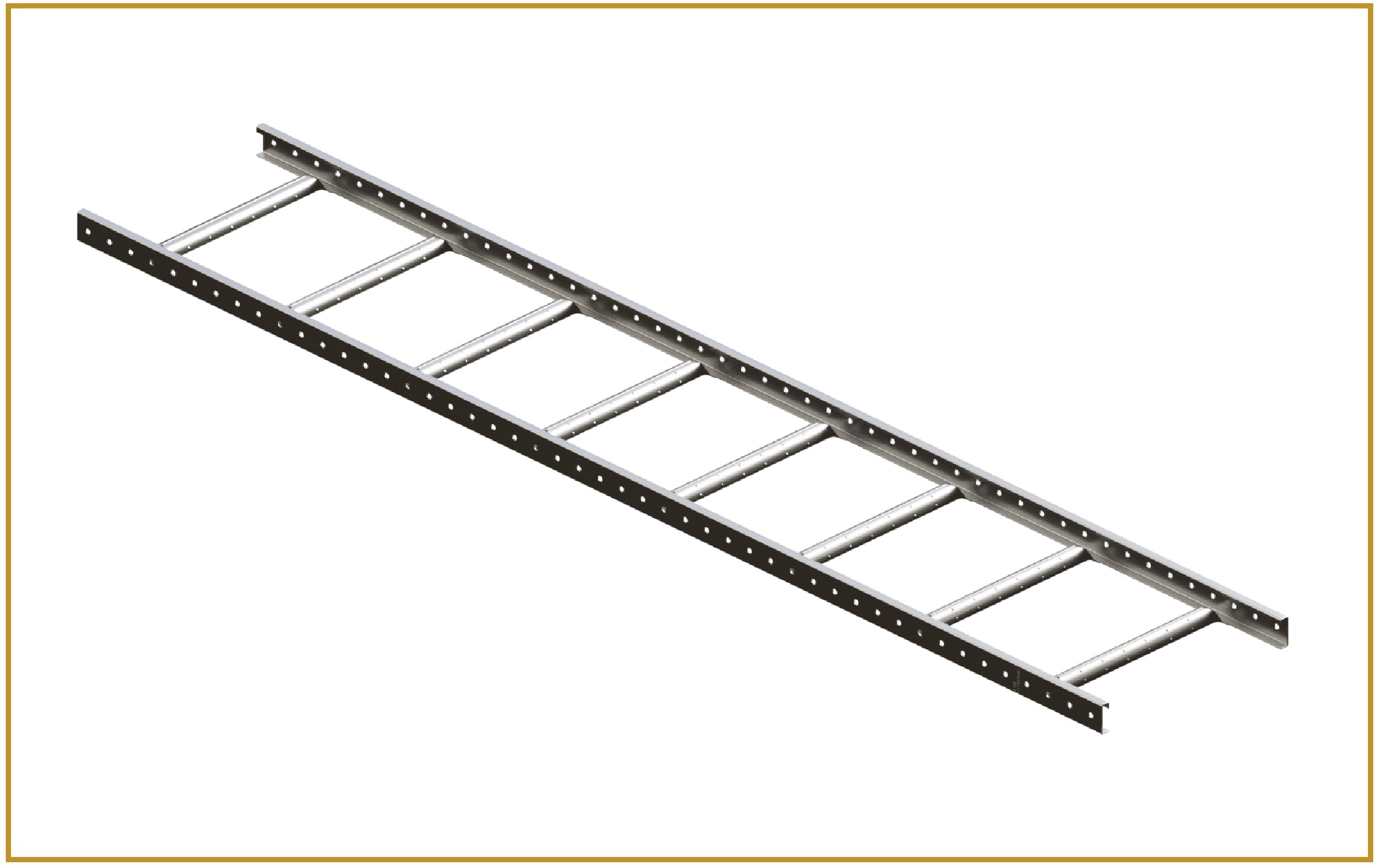
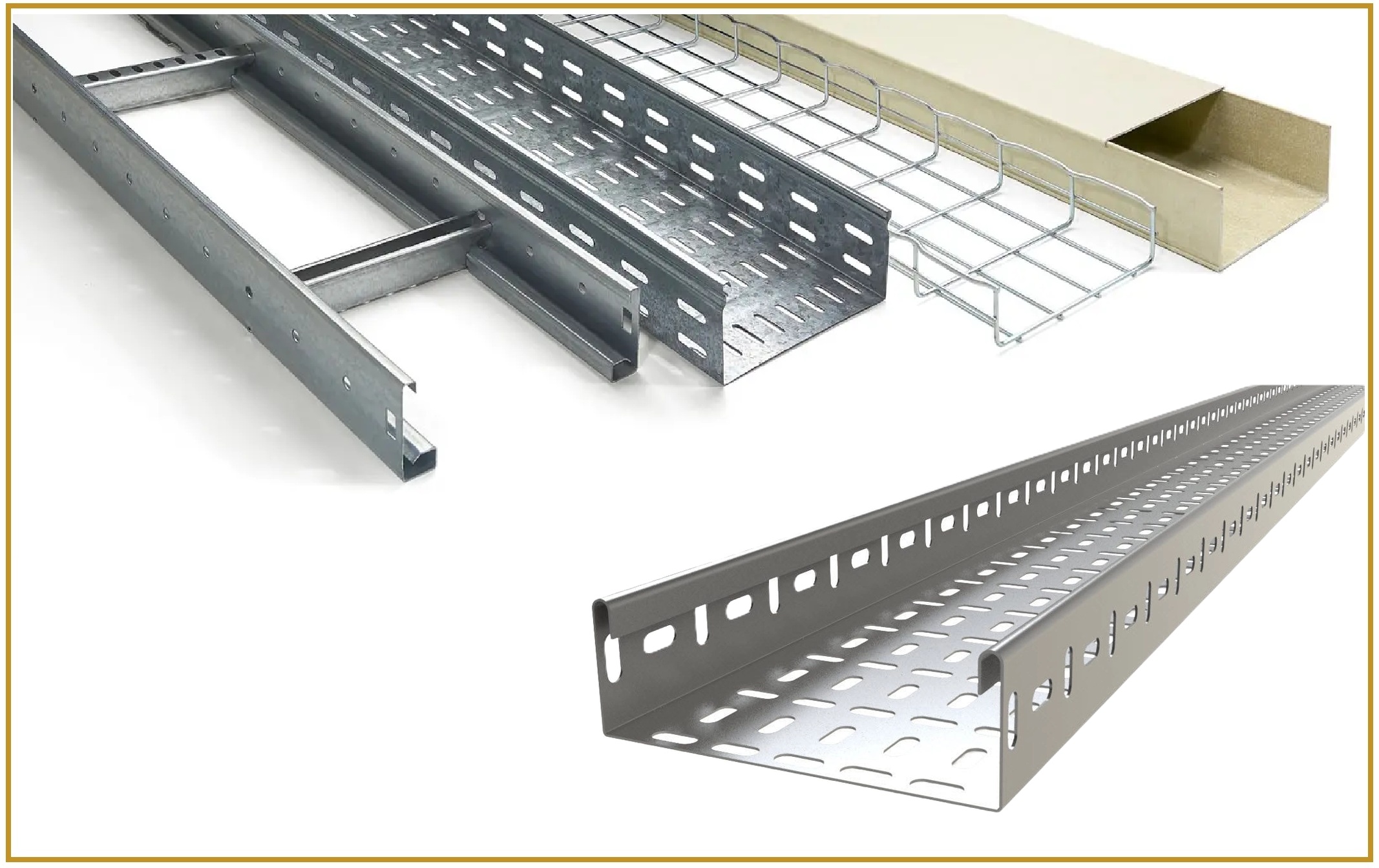
Ladder Cable Tray: Ladder cable trays feature two side rails connected by cross rungs, providing excellent ventilation, easy cable installation, and high load-bearing capacity. These trays are widely used for power cable management, heavy-duty electrical installations, industrial plants, power distribution systems, and large infrastructure projects.
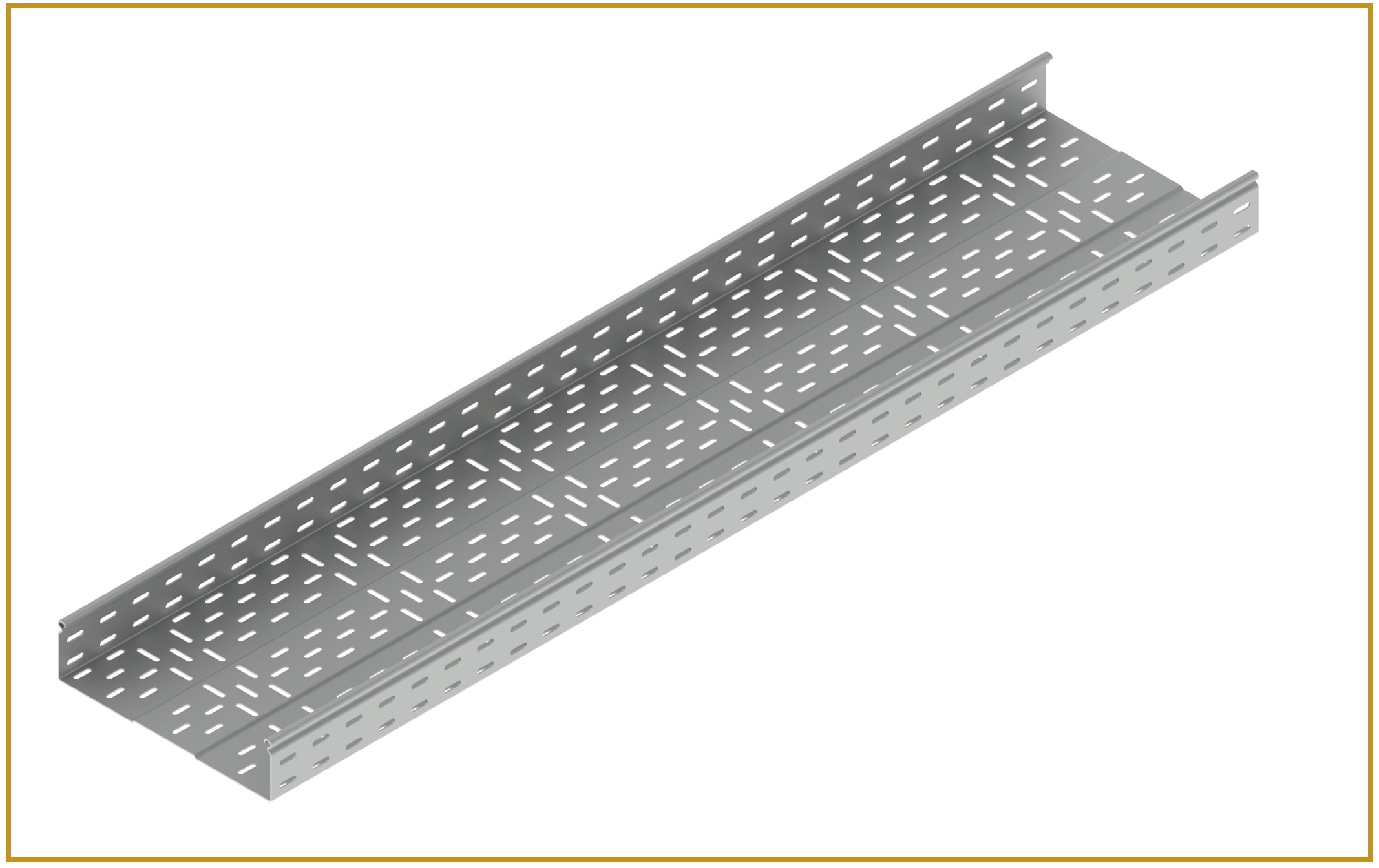
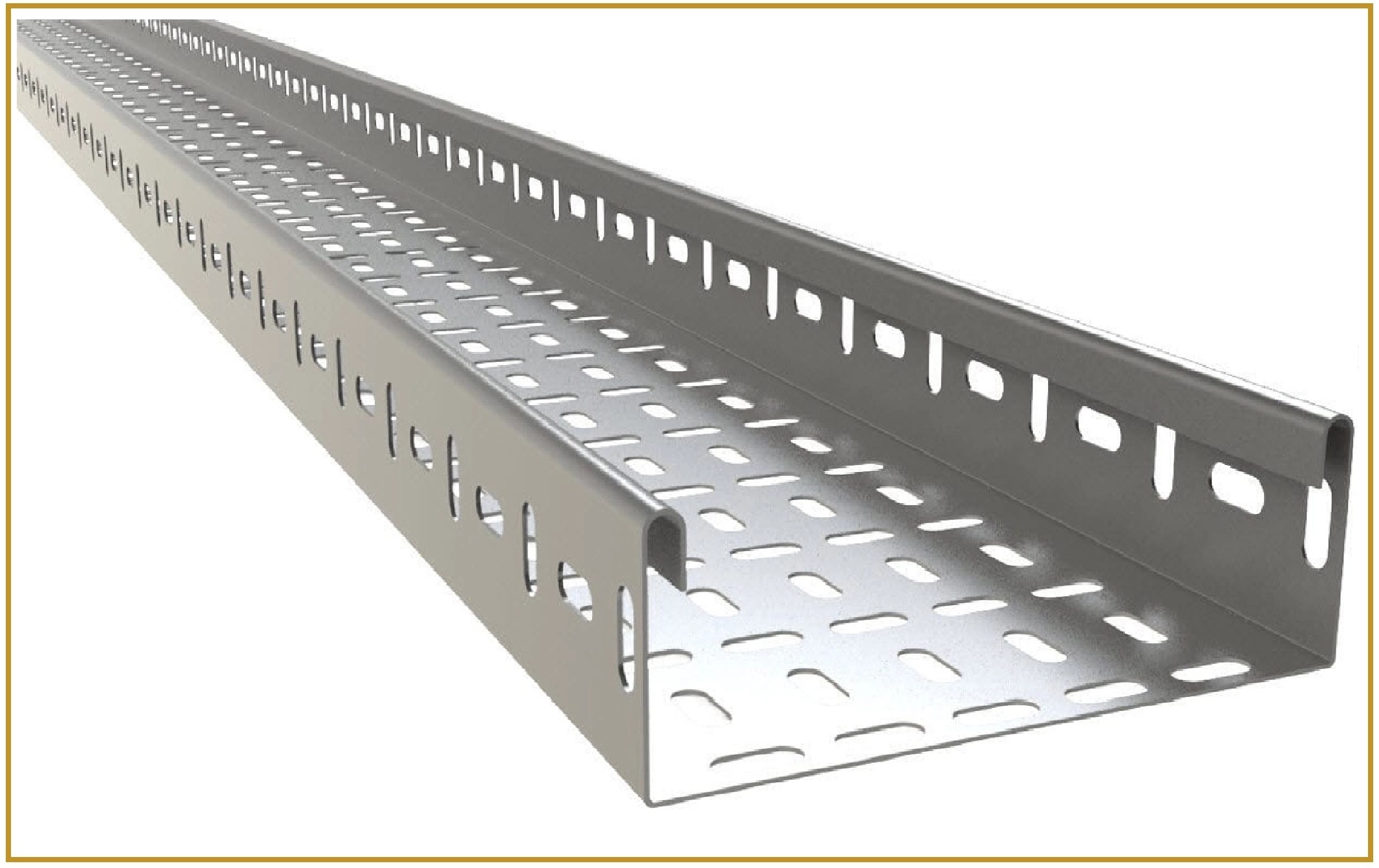
Perforated (Trough) Cable Tray: Perforated cable trays, also known as ventilated cable trays, are designed with evenly spaced perforations that improve airflow and reduce heat buildup around cables. They are ideal for control cables, instrumentation cables, and electrical wiring where efficient ventilation, accessibility, and easy maintenance are essential.
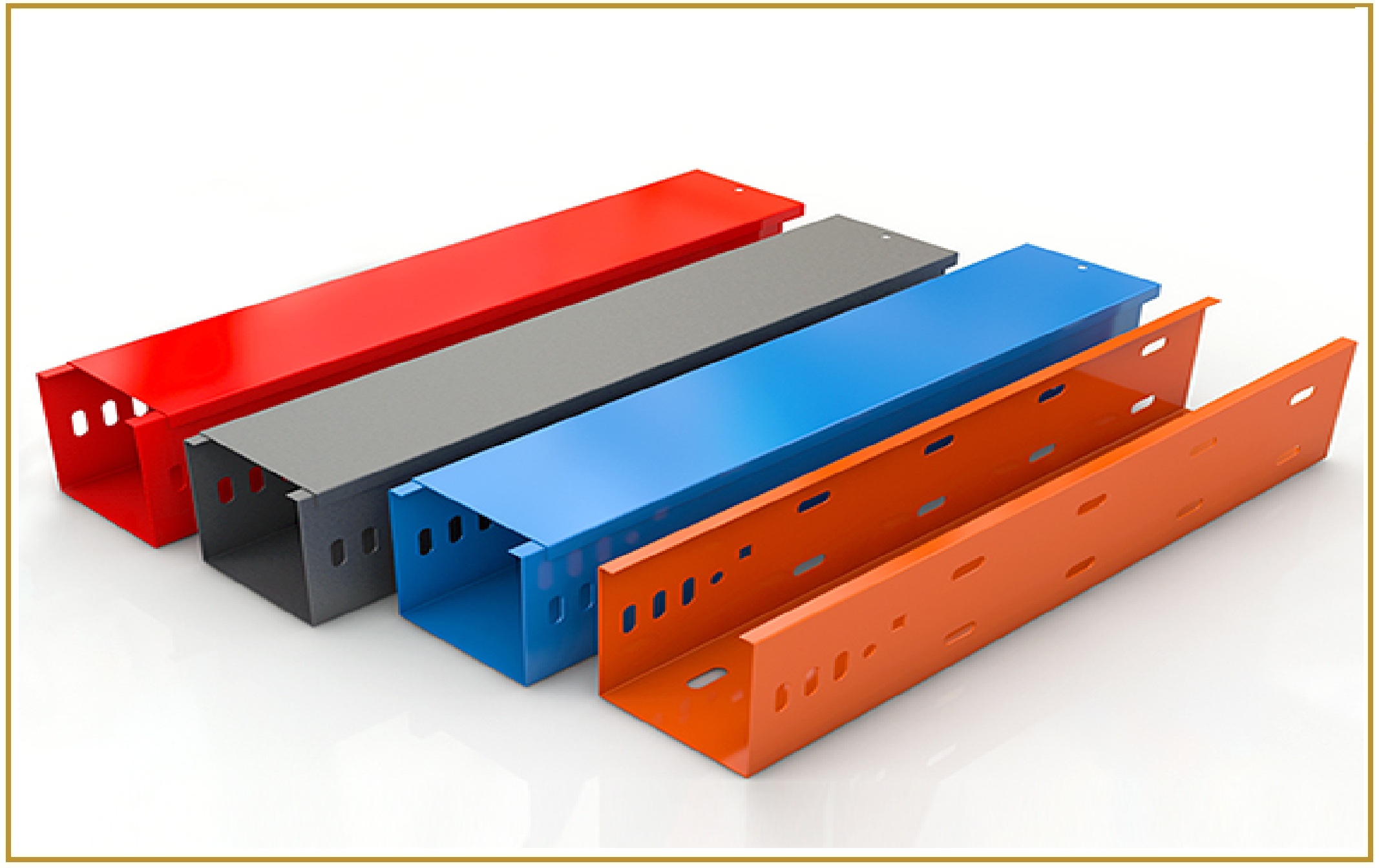
Solid Bottom Cable Tray: Solid bottom cable trays provide complete cable protection with an enclosed base that safeguards wiring from dust, moisture, debris, and external impact. They are commonly used for data cables, communication cables, fiber optic cables, and sensitive instrumentation systems where maximum cable protection is required.
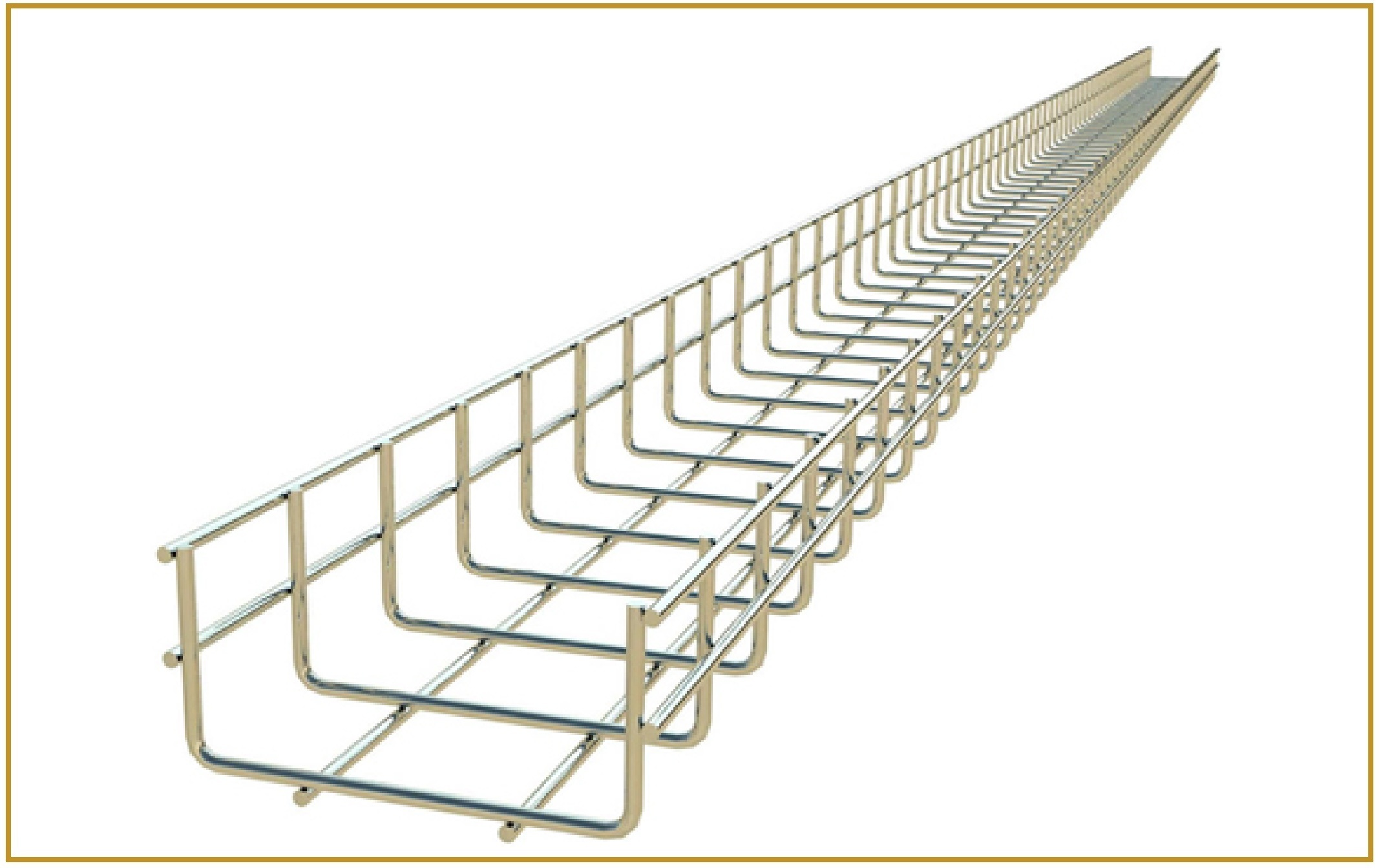
Wire Mesh (Basket) Cable Tray: Wire mesh cable trays, also known as basket cable trays, provide a lightweight, flexible, and easy-to-install cable management solution. Their open design simplifies cable routing, modifications, and maintenance, making them ideal for networking, telecommunications, structured cabling systems, and data centers.
Channel Cable Tray: Channel cable trays are designed to support small cable bundles in compact spaces. They provide efficient cable organization for control wiring, instrumentation systems, commercial buildings, and light electrical installations where space optimization is important.
Trough Cable Tray: Trough cable trays offer a balanced combination of cable protection and ventilation, making them suitable for medium-duty applications. They are commonly used in industrial wiring, manufacturing facilities, commercial buildings, and electrical cable support systems.
Pre-Galvanized Steel Cable Tray: Pre-galvanized steel cable trays are manufactured with a protective zinc coating that offers excellent corrosion resistance and long service life. These GI cable trays are widely used for indoor electrical installations, commercial buildings, factories, and industrial cable management applications.
Hot-Dip Galvanized (HDG) Steel Cable Tray: Hot-dip galvanized cable trays provide superior protection against rust, moisture, and harsh environmental conditions. These heavy-duty HDG cable trays are ideal for outdoor installations, industrial facilities, power plants, oil & gas projects, and infrastructure developments requiring long-term durability.
Stainless Steel (SS304/SS316) Cable Tray: Stainless steel cable trays are manufactured using SS304 or SS316 stainless steel, offering exceptional resistance to corrosion, chemicals, and extreme temperatures. They are widely used in pharmaceutical plants, food processing industries, chemical plants, marine environments, and hygienic industrial applications.
Aluminium Cable Tray: Aluminium cable trays provide a lightweight yet durable cable support solution with excellent natural corrosion resistance. Their ease of handling and installation makes them suitable for commercial buildings, industrial facilities, power projects, and applications requiring long-lasting cable management systems.
FRP/GRP (Fiberglass Reinforced Plastic) Cable Tray: FRP/GRP cable trays offer outstanding resistance to chemicals, moisture, corrosion, and UV exposure. These non-metallic cable trays are widely used in chemical processing plants, wastewater treatment facilities, offshore industries, marine applications, and other highly corrosive environments where durable cable support systems are required.
Technical Specifications of Cable Tray
As Cable Tray Suppliers in Pune, we provide precisely engineered cable tray solutions with customized specifications, superior materials, and reliable performance to fulfill the technical demands of every project.
Technical Specification
Perforated Cable Tray
Ladder Type Cable Tray
Raceways and Trunking Cable Tray
Wire Mesh Cable Tray
GI Cable Tray
Powder Coated Perforated Cable Tray
Powder Coated Ladder Cable Tray
Hot Dip Galvanized Cable Tray
Painted Cable Tray
Stainless Steel Cable Tray
Construction
Perforated sheet
Side rails with rungs
Solid-bottom sheet
Welded wire mesh
Galvanized sheet
Perforated sheet
Side rails with rungs
Mild steel tray with HDG coating
Painted sheet
Perforated, ladder or solid-bottom
Typical Applications
Power, control, general cables
Power and heat-producing cables
Instrumentation, control and communication
Data, fiber optic and communication
Power, data and communication
Power, control and general cables
Power and industrial cables
Heavy-duty power and industrial cables
General industrial and commercial applications
Power, control and specialized industrial cables
Ventilation
Good
Excellent
Low
Excellent
Configuration dependent
Good
Excellent
Configuration dependent
Cable Protection
Moderate to good
Moderate
Excellent
Moderate
Good
Moderate to good
Moderate
Good
Good
Good
Standard Length
2500 and 3000 mm
2500 and 3000 mm
2500 and 3000 mm
2500 and 3000 mm
2500 and 3000 mm
2500 and 3000 mm
2500 and 3000 mm
2500 and 3000 mm
2500 and 3000 mm
2500 and 3000 mm
Standard Width
100 to 700 mm
100 to 900 mm
100 to 750 mm
50 to 600 mm
100 to 700 mm
100 to 750 mm
100 to 900 mm
100 to 750 mm
100 to 750 mm
50 to 1000 mm
Standard Depth
50 to 150 mm
50 to 150 mm
50 to 150 mm
25 to 100 mm
50 to 150 mm
50 to 150 mm
50 to 150 mm
50 to 150 mm
50 to 150 mm
50 to 150 mm
Thickness / Wire Diameter
1.2, 1.5 and 2.0 mm
1.2, 1.5 and 2.0 mm
1.2, 1.5 and 2.0 mm
4, 5 and 6 mm wire diameter
1.2, 1.5 and 2.0 mm
1.2, 1.6 and 2.0 mm
1.2, 1.6 and 2.0 mm
1.2, 1.6, 2.0 and 2.5 mm
1.2, 1.5 and 2.0 mm
As per specified SS grade and design
Load Classification
Light, medium and heavy
As per design
Light, medium and heavy
As per design
Base Material
GI and MS sheets
GI and MS sheets
GI and MS sheets
Mild steel, SS304 and SS316
GI and MS sheets
Mild steel and pre-galvanized sheets
Mild steel
Mild steel
SS304, SS316 or specified grade
Finish / Coating
Powder coating, pre-galvanized or HDG
Electro-galvanized, HDG, powder coated or stainless steel
Powder coating, pre-galvanized or HDG
Electrostatic powder coating
Hot dip galvanized
Painted finish
Stainless steel finish
Corrosion Resistance
Depends on finish
Depends on finish
Depends on finish
Good to excellent
Good
Good to excellent
Good to excellent
Excellent
Depends on paint system
Excellent
Environmental Suitability
Industrial and commercial
Industrial and power
Indoor and control applications
Data and communication installations
Industrial and commercial
Commercial, industrial and infrastructure
Outdoor, industrial, chemical and harsh environments
Indoor and general industrial applications
Food, pharmaceutical, chemical, marine and harsh environments
Fittings & Accessories
Tees, crosses, elbows, risers and reducers
Custom Sizes
Available
Available
Available
Available
Available
Available
Available
Available
Available
Available
How to Select the Right Cable Tray for Your Project
Choosing the correct Cable Tray depends on cable load, environment, and future scalability. Here's how to approach it:
Calculate Total Cable Load: Add up the cross-sectional area of all cables that will run through the tray. Keep fill capacity within 40-60% to allow proper ventilation and future additions.
Plan for Future Expansion: Choose a slightly larger tray size than your current requirement to avoid costly rework when new cables are added later.
Check Load-Bearing Capacity: Match the tray's rated load capacity to the total weight per meter of your cables, factoring in support span.
Select the Right Width and Depth: Standard widths range from 100 mm to 1000 mm and depths from 25 mm to 150 mm — choose based on cable quantity and layering needs.
Match Material to Environment: Use GI or Pre-Galvanized for standard indoor use, Hot-Dip Galvanized for outdoor/humid conditions, Stainless Steel for chemical or hygienic environments, and FRP for highly corrosive or hazardous areas.
Follow Applicable Standards: Ensure your selection complies with IS 6150, NEMA VE-1, or IEC 61537 depending on project requirements.
Key Features & Benefits of Cable Tray
As Cable Tray Manufacturers and Suppliers in Pune, we provide reliable cable management solutions designed with advanced manufacturing techniques, premium-quality materials, and superior quality standards. Our Cable Tray systems offer excellent strength, protection, flexibility, and long-term performance for various industrial, commercial, and electrical installations.
High Strength & Durable Construction: Manufactured using premium-quality materials such as MS, GI, Aluminium, and Stainless Steel, our Cable Tray provides excellent mechanical strength and reliable cable support in demanding operating environments.
Multiple Design Options: Available in Perforated Cable Tray, Ladder Type Cable Tray, Wire Mesh, and Channel designs, our Cable Tray systems can be selected according to different industrial, commercial, and electrical installation requirements.
Superior Corrosion Protection: Hot Dip Galvanized, Pre-Galvanized, and Powder Coated finishes provide enhanced protection against corrosion, moisture, and harsh environmental conditions, ensuring long-term reliability with minimal maintenance.
Efficient Cable Management: Our well-designed Cable Management System keeps power, control, and communication cables neatly organized, improving accessibility, safety, and overall installation efficiency.
Improved Cable Protection & Heat Dissipation: The strong structure securely supports cables and helps protect them from mechanical damage and environmental exposure. Open designs such as perforated and ladder trays also promote better airflow and heat dissipation, supporting longer cable service life.
Easy Installation & Maintenance: Compatible accessories and flexible designs simplify installation, inspection, maintenance, and future cable modifications, helping reduce installation time and maintenance efforts.
Customized Solutions: We offer customized Electrical Cable Tray solutions in various sizes, thicknesses, materials, and finishes to meet specific project requirements and installation conditions.
Cost-Effective & Long-Term Performance: Durable materials, corrosion-resistant finishes, and efficient installation help reduce maintenance requirements and provide an economical solution for large-scale cable routing applications.
Cable Tray Accessories
A complete range of Cable Tray Accessories is available to ensure secure connections, smooth cable routing, and reliable support throughout the installation. These accessories enhance the performance, flexibility, and durability of Cable Tray Systems used in industrial, commercial, and infrastructure applications.
Cable Tray Cover: Cables are protected from dust, moisture, and external damage, while also ensuring safety and durability.
Cable Tray Bend: Includes Horizontal Bend and Vertical Bend to enable smooth directional changes while maintaining proper cable alignment.
Cable Tray Reducer: It is easy to connect between different width cable trays, and then it is convenient to route the cable.
Tee Cable Tray & Cross Cable Tray: Assists in making branch connections and complex cable distribution.
Cable Tray Coupler & Joint Plate: Strong and secure connection between the sections of the tray, resulting in improved structural stability.
Cable Tray Clamp: Provides secure anchoring of cables and the parts of the tray to ensure safe and reliable installation.
Cable Tray Bracket & Hanger: Provides strong support for wall-mounted and ceiling-mounted cable tray installations.
Cable Tray Support: Ensures correct positioning and load distribution of the trays for long-term use.
These accessories enhance the installation process, streamline cable management, and ensure a more secure Cable Tray System.
Perforated (Trough) Cable Tray
Ladder Cable Tray
Pre-Galvanized Steel Cable Tray
Hot-Dip Galvanized (HDG) Steel Cable Tray
Stainless Steel Cable Tray
Solid bottom cable trays
project case studies – Cable Tray Projects We Have Successfully Handled
At BNY Metal Coat, we understand that every electrical installation has different cable routing challenges. In our experience as Cable Tray Manufacturers in Pune, we have worked on cable management requirements where standard, off-the-shelf solutions were not always sufficient. Our approach is to first understand the project's technical requirements, identify the actual cable routing problems, and then develop a Cable Tray System that provides safe, organized, durable, and practical cable management.
Our project experience includes industrial plants, manufacturing facilities, commercial buildings, power distribution systems, infrastructure projects, process industries, and other demanding electrical installations. We analyze factors such as cable quantity, cable weight, tray width and depth, support span, installation environment, available space, routing direction, future expansion, corrosion exposure, and maintenance requirements before finalizing the appropriate solution.
Case Scenario 1: Heavy Cable Load in an Industrial Manufacturing Plant
One of the common challenges in large manufacturing facilities is managing a high quantity of power and control cables running between electrical panels, MCCs, transformers, machinery, and production areas.
The Customer's Challenge
The project required a cable routing system capable of supporting a significant cable load while maintaining proper organization and accessibility. The available routing space was limited, and the customer also needed sufficient ventilation around power cables to prevent unnecessary heat accumulation.
Another concern was future expansion. Additional machinery and electrical equipment were expected to be installed later, meaning the cable management system needed to accommodate future cables without requiring major modifications.
Our Analysis
Our technical team analyzed the cable quantities, estimated cable loading, available installation space, routing directions, support locations, and expected future cable additions.
We evaluated the required tray width, depth, material thickness, support arrangement, and tray configuration. Based on the project requirements, we recommended a suitable heavy-duty cable tray arrangement with appropriate bends, reducers, joint plates, brackets, and supports.
Our Solution
We supplied a customized Ladder Cable Tray and Perforated Cable Tray System designed around the project's cable routing requirements.
The system provided:
Improved support for heavy power and control cables
Better cable organization between electrical equipment
Improved ventilation around cables
Easier access for inspection and maintenance
Proper routing through bends, risers, and changes in direction
Additional capacity for future cable additions
Strong and stable installation using suitable supports and accessories
Project Outcome
The customer was able to establish a more organized cable routing system without unnecessarily overcrowding the installation area. The customized tray arrangement also made future cable additions and maintenance more manageable.
Case Scenario 2: Space Constraints in a Commercial Building
Commercial and institutional projects often present a different challenge. Unlike large industrial plants, these projects may have restricted ceiling spaces, congested service areas, and multiple building services competing for the same available space.
The Customer's Challenge
The customer needed to route power, lighting, communication, CCTV, fire alarm, HVAC, and other ELV cables through limited service areas.
The primary problem was avoiding cable congestion while maintaining accessible and organized cable routes. The cable management system also needed to accommodate multiple directional changes around structural elements and other building services.
Our Analysis
We reviewed the available installation space and considered the cable quantity, cable types, routing paths, installation levels, and access requirements.
Instead of treating the project as a simple straight-run cable tray installation, we considered the complete routing network, including horizontal changes, vertical transitions, branch connections, and different tray widths.
Our Solution
We developed a customized cable tray arrangement using suitable tray configurations and accessories such as:
Perforated Cable Trays
Channel Cable Trays
Horizontal bends
Vertical bends
Tees
Crosses
Reducers
Couplers and joint plates
Brackets and supports
This enabled different cable routes to be organized efficiently while making better use of the available service space.
Project Outcome
The customer received a cleaner and more manageable cable routing arrangement. The organized system improved accessibility for electrical maintenance and reduced the difficulty associated with identifying and modifying cable routes during future building-service work.
Case Scenario 3: Corrosion Concerns in a Harsh Industrial Environment
In industrial and process facilities, cable trays may be exposed to moisture, chemicals, humidity, outdoor conditions, or other corrosive environments. Selecting the wrong material or surface finish can result in premature deterioration and increased maintenance requirements.
The Customer's Challenge
The customer required cable management for an environment where ordinary finishes could potentially be exposed to demanding operating conditions. The primary concern was achieving reliable long-term cable support while improving resistance to corrosion.
Our Analysis
We assessed the environmental conditions, installation location, exposure level, cable requirements, expected service conditions, and project durability expectations.
Material and surface protection were considered as part of the overall cable tray design rather than treating coating selection as an afterthought.
Our Solution
Based on the application, we recommended an appropriate corrosion-resistant cable tray configuration. Depending on project conditions, options such as Hot-Dip Galvanized Cable Tray, Stainless Steel Cable Tray, or FRP/GRP Cable Tray can be considered.
We also ensured that compatible accessories and supports were considered so that the complete installation maintained the required level of protection.
Project Outcome
The resulting cable management solution was better suited to the project's operating environment, providing dependable cable support while helping reduce concerns related to corrosion and long-term maintenance.
Case Scenario 4: High-Density Cable Routing in a Data and Communication Facility
Data centers and communication facilities require careful cable organization because a large number of cables may need to be installed, modified, removed, and replaced throughout the operational life of the facility.
The Customer's Challenge
The customer needed a cable management system capable of handling a high density of network, communication, fiber-optic, and associated power cables.
The system needed to provide easy access to cables while allowing future modifications without disturbing the entire installation.
Our Analysis
We analyzed the cable density, available routing area, cable entry and exit points, expected future additions, and maintenance requirements.
We focused on providing an open and accessible cable support arrangement rather than creating unnecessary congestion around sensitive communication cabling.
Our Solution
For suitable sections of the installation, we provided Wire Mesh/Basket Cable Tray solutions and associated cable management accessories.
The open construction allowed cables to be placed, identified, inspected, and modified more conveniently. The tray configuration was planned around the actual routing requirements rather than relying solely on standard dimensions.
Project Outcome
The customer achieved a more flexible and accessible cable management system, making routine cable additions, inspection, and maintenance easier while keeping the installation organized.
Case Scenario 5: Complex Cable Routing in a Power Distribution Project
Power distribution projects can involve multiple electrical systems, equipment connections, and cable routes. The challenge is not simply supporting cables but creating a routing system that remains structurally reliable and accessible throughout the installation.
The Customer's Challenge
The project involved routing power, control, protection, and auxiliary cables across different sections of the facility. The routing included multiple turns, elevation changes, and branch connections.
The customer required a cable tray system that could handle the cable load while maintaining a practical routing path.
Our Analysis
Our team studied the cable routes and considered:
Cable weight and quantity
Required tray width and depth
Support span
Horizontal and vertical routing
Equipment connection points
Branch connections
Future cable requirements
Environmental conditions
Accessibility for maintenance
This analysis helped us determine where straight tray sections, bends, tees, crosses, reducers, and other fittings were required.
Our Solution
We supplied a customized heavy-duty Cable Tray System with suitable tray dimensions, material thickness, supports, and accessories.
The system was configured to provide continuous cable support from one section of the electrical installation to another while maintaining organized routing around equipment and structural obstacles.
Project Outcome
The customer obtained a structured cable management system capable of supporting complex electrical routing requirements. The use of properly selected fittings and supports also helped simplify installation and maintenance.
Case Scenario 6: Outdoor Cable Routing for Renewable Energy Applications
Outdoor electrical projects such as solar installations present additional cable management challenges because the cable tray system is exposed to weather, moisture, dust, temperature variations, and other environmental conditions.
The Customer's Challenge
The customer needed to route power, control, monitoring, and communication cables between electrical equipment installed across an outdoor project area.
The cable management system needed to provide reliable support over long routing distances while being suitable for outdoor exposure.
Our Analysis
We evaluated the outdoor installation conditions, cable quantities, routing distances, equipment locations, support requirements, and required corrosion protection.
Particular attention was given to selecting a suitable tray material and finish for the project's environmental conditions.
Our Solution
We provided a cable tray configuration with suitable corrosion protection, dimensions, supports, and accessories. The routing arrangement was planned to maintain organized cable paths between equipment and electrical connection points.
Project Outcome
The customer received a structured outdoor cable management solution designed around the project's environmental and routing requirements, helping improve cable organization, accessibility, and long-term installation reliability.
Our Problem-Solving Approach to Cable Tray Projects
Our project experience has taught us that selecting a Cable Tray is not simply a matter of choosing a width from a standard catalogue. A successful cable management system begins with understanding the actual project problem.
1. We Understand the Project Requirement:
We first understand what the customer needs to achieve. This includes the type and quantity of cables, installation environment, available space, equipment locations, routing distance, and expected future requirements.
2. We Analyze Cable Load:
Cable quantity and weight directly influence tray dimensions, material thickness, support spacing, and load-bearing requirements. We consider the expected cable load when developing the appropriate tray configuration.
3. We Study the Installation Environment:
Indoor, outdoor, humid, chemical, marine, pharmaceutical, and industrial environments can require different materials and finishes. We consider environmental exposure when recommending the cable tray material and surface protection.
4. We Solve Space and Routing Problems:
Not every project has a simple straight cable route. We address changes in direction, elevation differences, equipment connections, congested areas, and restricted installation spaces using suitable tray sizes and accessories.
5. We Consider Future Expansion:
Where projects are expected to expand, we consider additional cable capacity during the planning stage. This can help reduce the need for major cable tray modifications when new cables are introduced.
6. We Provide Customized Cable Tray Solutions:
When standard sizes do not adequately address the application, we provide customized cable tray dimensions, thicknesses, materials, finishes, and configurations according to project requirements.
7. We Support the Complete Cable Management System:
Our involvement does not stop at the tray itself. We provide compatible accessories such as bends, tees, crosses, reducers, couplers, joint plates, clamps, brackets, hangers, and supports to help create a complete installation.
From Cable Routing Problems to Practical Solutions
Our experience across different cable tray applications allows us to approach every project from a problem-solving perspective. Whether the challenge involves heavy cable loads, restricted space, corrosion, complex routing, high cable density, outdoor exposure, or future expansion, we analyze the application before recommending a solution.
As a trusted Cable Tray Manufacturer, Supplier, and Exporter in Pune, BNY Metal Coat is committed to providing cable management systems that are engineered around actual project requirements. Our objective is not simply to supply cable trays, but to help customers develop safe, organized, durable, accessible, and cost-effective cable routing solutions for their electrical infrastructure.
If you have a challenging cable routing requirement, our team can review your project specifications and recommend a suitable Cable Tray System based on your cable load, installation environment, available space, and project requirements.
Applications of Cable Tray
As Cable Tray Exporters in Pune, we provide high-quality cable management systems designed for safe, organized, and efficient cable routing across industrial, commercial, power, and infrastructure sectors. Our cable tray solutions ensure reliable electrical cable support, easy maintenance, and long-lasting performance in demanding environments.
Power Distribution Systems: Cable trays provide safe, organized routing for power cables used in transformers, switchgear, MCCs, distribution panels, generators, and UPS systems. They offer efficient cable management, easy maintenance, and reliable support for electrical power distribution networks.
Industrial & Manufacturing Facilities: Cable trays are widely used in factories and manufacturing plants to route power, control, automation, and machinery cables. They provide durable and accessible cable management for demanding industrial electrical installations.
Process Industries: Cable trays support electrical, instrumentation, control, and communication cables in oil & gas, petrochemical, chemical, pharmaceutical, and water-treatment plants. They provide organized cable routing and reliable support in complex industrial environments.
Power Plants & Substations: Cable tray systems are used to route power, control, protection, instrumentation, and auxiliary cables in power plants and substations. They enable efficient cable organization while simplifying inspection, maintenance, and future cable expansion.
Commercial & Institutional Buildings: Cable trays provide efficient cable management for power, lighting, HVAC, communication, and electrical systems in commercial and institutional buildings. They are suitable for offices, hospitals, hotels, schools, shopping centers, and other large facilities.
Data Centers & Telecommunication Facilities: Cable trays organize power, data, network, fiber-optic, and communication cables in data centers and telecommunication facilities. They support structured cabling while improving accessibility, airflow, maintenance, and overall cable management.
Control, Automation & Instrumentation Systems: Cable trays are used for routing PLC, DCS, SCADA, instrumentation, signal, and control cables in automated industrial systems. They provide organized cable separation and accessible routing for reliable control and instrumentation installations.
Building Services & ELV Systems: Cable trays support cables for HVAC, BMS, fire alarm, CCTV, access control, security, and other ELV systems. They provide neat, accessible, and efficient cable management for modern building services and low-voltage installations.
Transportation Infrastructure: Cable trays are used in railway, metro, airport, and tunnel projects for power, signaling, lighting, communication, and control cables. They provide robust cable support and organized routing for complex transportation infrastructure systems.
Renewable Energy Systems: Cable trays provide reliable cable routing for solar PV plants, wind farms, battery energy storage systems, and EV charging installations. They help protect and organize power, control, monitoring, and communication cables in renewable energy projects.
Mining & Heavy Industrial Facilities: Cable trays are used to route heavy-duty power, control, communication, and instrumentation cables in mining and industrial facilities. They provide strong and accessible cable support for demanding electrical installations and harsh operating environments.
Marine & Offshore Installations: Cable trays provide organized routing for electrical, control, instrumentation, and communication cables on ships and offshore platforms. Corrosion-resistant cable tray systems offer reliable cable support in demanding marine and offshore environments.
Warehouses & Logistics Facilities: Cable trays are used for power, lighting, automation, conveyor, security, and communication cables in warehouses and logistics centers. They provide flexible and accessible cable management for modern automated storage and distribution facilities.
Infrastructure & Utility Projects: Cable trays support electrical, communication, control, and utility cables in parking facilities, water infrastructure, public utilities, and large projects. They provide an efficient cable management solution for organized and maintainable infrastructure installations.
Why Choose Us for cable tray?
Trusted Industry Partner: We are a reliable manufacturer of high-quality Cable Tray Systems, offering precisely engineered solutions designed for safe, efficient, and organized cable management across industrial, commercial, and infrastructure projects.
Superior Quality & Advanced Manufacturing: With advanced fabrication facilities, skilled professionals, and strict quality inspections, we deliver durable Electrical Cable Tray solutions manufactured using premium materials for long-lasting performance.
Customized Solutions & Wide Product Range: We provide customized cable management solutions including Perforated Cable Tray, Ladder Type Cable Tray, Wire Mesh Cable Tray, GI Cable Tray, and other designs to meet specific project requirements.
Reliable Delivery & Customer Support: Our commitment to timely delivery, responsive project support, and customer-focused service ensures smooth execution of projects with dependable cable routing and electrical support solutions.
BNY Metal Coat is prominent Cable Tray Manufacturers in Pune, Suppliers and Exporters in Pune. We are committed to providing top-notch Cable Tray solutions that allow for safe cable routing, efficient management, and durability in various industries. Equipped with state of the art manufacturing capabilities, offering custom solutions and a commitment to excellence, we deliver reliable cable support systems that ensure customer satisfaction and meet the requirements of today's electrical infrastructure. Reach out to us for additional details.
FAQs
Cable Trays are manufactured using materials such as Mild Steel (MS), Galvanized Iron (GI), Stainless Steel, Aluminium, and Pre-Galvanized Steel based on application and environmental conditions.
Cable Trays are available with finishes such as Hot Dip Galvanized, Pre-Galvanized, Powder Coated, Painted, and Stainless Steel finishes to provide durability and corrosion resistance.
A Cable Tray System provides organized cable routing, easy maintenance, better ventilation, reduced installation time, and reliable support for electrical and communication cables.
A Cable Tray is an open cable support system that provides better ventilation and easy maintenance, while a cable duct is an enclosed system used for additional cable protection.
A Cable Tray System offers easier installation, better airflow, and simpler maintenance, making it suitable for large cable networks and industrial applications.