

Introduction
Modern electrical installations require a reliable way to organize, support and protect cables. From commercial buildings and manufacturing plants to data centres and infrastructure projects, effective cable management plays an important role in maintaining safe and efficient electrical systems. This is where cable trays become essential.
If you are wondering what is a cable tray, it is a structural support system designed to carry and organize electrical power cables, control cables, instrumentation cables and communication wiring. Cable trays provide a planned route for cables, simplify maintenance and allow installations to accommodate future expansion.
Different cable tray designs are available to suit varying cable loads, environmental conditions and installation requirements. Understanding their types, uses and benefits can help contractors, engineers and project managers select the right solution.
In this guide, we explain cable trays, their common types, applications, advantages and the factors to consider when choosing a suitable system.
In This Guide
What Is a Cable Tray?
A cable tray is a rigid support structure used to route and support insulated electrical and communication cables along walls, ceilings, floors or designated service areas. It forms part of a cable management system that keeps wiring organized and accessible throughout an installation.
Unlike electrical conduits, which enclose cables within pipes, many cable trays use an open or partially enclosed design. This allows technicians to inspect cable routes, identify wiring and make modifications when required.
Cable trays are manufactured in different configurations, including perforated, ladder-type, solid-bottom and wire mesh designs. They are also available in materials such as mild steel, galvanised steel, stainless steel and aluminium, depending on the application.
A complete cable tray system may include straight sections, bends, tees, reducers, covers, couplers, brackets and support structures. These components work together to create a continuous and well-organized cable route. Learn more about the available cable tray accessories.
What Are the Different Types of Cable Trays?
Selecting the appropriate cable tray depends on cable weight, installation environment, ventilation requirements and available space. Below are the most common cable tray types.
1. Perforated Cable Tray
A perforated cable tray is manufactured from a metal sheet with regularly spaced openings along its base. These perforations allow ventilation while providing continuous support for cables.
Perforated trays are widely used in commercial buildings, industrial facilities, electrical installations and control systems. They offer a practical balance between cable support, accessibility and airflow.
Key benefits:
- Supports different types of electrical and control cables.
- Allows ventilation through perforations.
- Provides convenient access for inspection and maintenance.
- Offers a versatile solution for many indoor installations.
Explore our Perforated Cable Trays to learn more about this cable management option.
2. Ladder Type Cable Tray
A ladder cable tray consists of two side rails connected by evenly spaced cross rungs. Its open structure promotes airflow and provides convenient access to cables.
Ladder trays are commonly selected for heavy-duty installations where cable loads, ventilation and maintenance access are important considerations. Typical applications include power plants, industrial facilities, substations and infrastructure projects.
Key benefits:
- Provides an open structure for effective ventilation.
- Supports suitable heavy-duty cable installations when properly designed.
- Makes cable inspection and replacement easier.
- Accommodates long cable routes with appropriate supports.
Discover our Ladder Type Cable Trays for industrial and commercial cable routing requirements.
3. Solid-Bottom Cable Tray
A solid-bottom cable tray features a continuous base without the regular perforations found in perforated designs. It can be considered for applications requiring a more continuous supporting surface.
These trays may be suitable for certain control, instrumentation and communication cable installations. However, cable temperature, ventilation, environmental exposure and manufacturer recommendations should be evaluated before selection.
Key benefits:
- Provides continuous base support.
- Helps contain loose cable components within the tray.
- Can be used in installations where an open base is unsuitable.
- Supports organized routing when selected for the correct cable type.
4. Wire Mesh Cable Tray
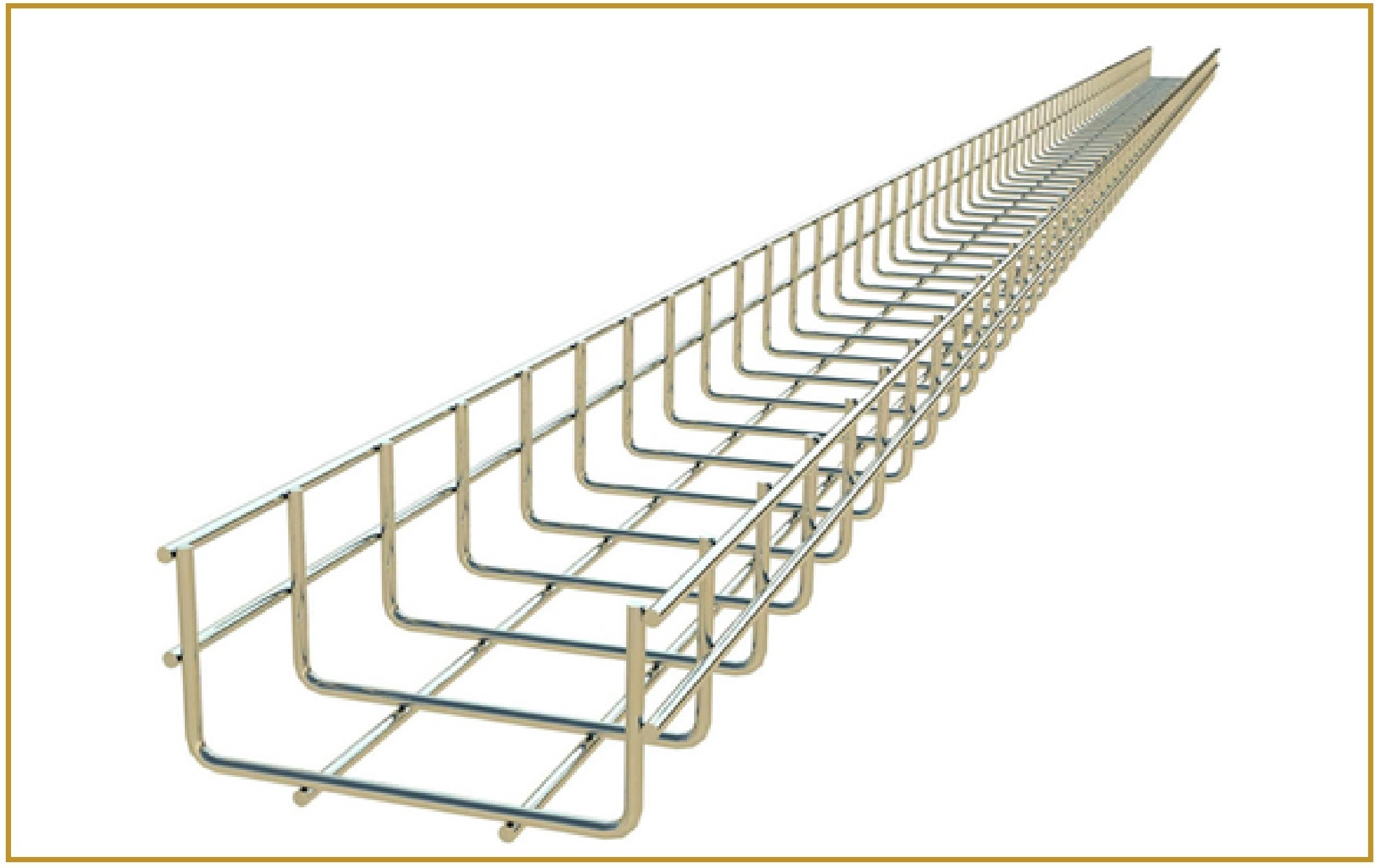
Wire mesh cable trays, also called basket cable trays, are constructed from welded metal wires. Their lightweight, open design makes them useful for structured cabling and communication systems.
They are frequently used in data centres, IT rooms, office networks and telecommunications installations.
Key benefits:
- Lightweight and convenient to handle.
- Provides good airflow around cables.
- Allows flexible routing in suitable installations.
- Makes cable additions and inspection relatively straightforward.
See our Wire Mesh Cable Trays for structured cabling requirements.
5. Channel Cable Tray
Channel cable trays are compact cable support systems designed for smaller cable groups and shorter routing distances. They are often used in equipment connections, control wiring and building services.
Their compact design makes them useful where installation space is limited or where a smaller cable support arrangement is sufficient.
Key benefits:
- Suitable for smaller cable runs.
- Requires relatively little installation space.
- Supports organized wiring around equipment.
- Can simplify routing in compact installations.
What Materials Are Used in Cable Trays?
Cable tray material selection affects corrosion resistance, mechanical performance, service life and overall project cost.
Galvanised Iron (GI) Cable Tray
GI cable trays use zinc-coated steel to provide corrosion protection. They are commonly considered for indoor electrical installations and industrial environments where the specified coating is suitable.
Hot-Dip Galvanised Cable Tray
Hot-dip galvanised trays receive a zinc coating through a hot-dip galvanising process. They are frequently used in outdoor installations and industrial environments requiring suitable corrosion protection.
Stainless Steel Cable Tray
Stainless steel trays are suitable for applications where corrosion resistance and durability are important. Depending on the stainless steel grade and operating conditions, they may be used in food processing, pharmaceutical facilities and demanding industrial environments.
Aluminium Cable Tray
Aluminium cable trays are lightweight and naturally resistant to corrosion under many conditions. They can be useful where reduced structural weight and ease of handling are important.
Powder-Coated Cable Tray
Powder-coated trays feature a protective surface finish that can improve appearance and provide additional surface protection. Their suitability depends on the coating specification and environmental conditions.
For product-specific options, explore GI Cable Trays, Hot-Dip Galvanised Cable Trays, Stainless Steel Cable Trays and Powder-Coated Cable Trays.
What Are the Uses of Cable Trays?
Cable trays are used in a wide range of electrical and infrastructure projects. Their main purpose is to provide a structured route for cables while making installation and maintenance more manageable.
Common applications include:
- Industrial facilities: Supporting power, control and instrumentation cables across manufacturing plants and production areas.
- Commercial buildings: Organizing electrical wiring in offices, shopping centres, hospitals and other large buildings.
- Power plants and substations: Routing electrical cables and supporting associated control systems.
- Data centres: Managing network, communication and other compatible cables in equipment areas.
- Renewable energy projects: Supporting cable routes in solar power plants and other energy installations.
- Infrastructure projects: Providing cable support in transport facilities, utility installations and large construction developments.
The appropriate tray type depends on the cable specifications, environment, installation design and applicable electrical requirements.
What Are the Benefits of Cable Trays?
Cable trays offer several practical advantages over less structured cable routing arrangements.
1. Improved Cable Organization
Cable trays keep cables arranged along designated routes, helping reduce clutter and making electrical systems easier to understand.
2. Easier Inspection and Maintenance
Accessible tray designs allow technicians to inspect cable routes, identify wiring and carry out maintenance without dismantling extensive sections of an installation.
3. Flexible Installation
Cable trays can be configured using bends, tees, reducers and other fittings to accommodate building layouts and changes in routing direction.
4. Better Airflow for Suitable Designs
Open ladder and perforated tray designs allow airflow around cables. Actual cable temperature performance depends on cable loading, installation conditions and manufacturer guidance.
5. Support for Future Expansion
A properly planned cable tray system can make it easier to add cables when spare capacity has been considered during the original design.
6. Efficient Use of Space
Trays can be installed along walls, ceilings and designated service routes, helping organize cables in facilities with limited installation space.
7. Long-Term Maintenance Value
When the tray material, coating, loading and support arrangement are correctly selected, a cable tray system can provide dependable service and reduce avoidable maintenance difficulties.
How to Choose the Right Cable Tray
Choosing the right cable tray requires more than comparing dimensions or prices. Consider the following factors before making a selection.
- Cable load: Calculate the total cable weight and account for the required design and safety criteria.
- Tray dimensions: Select an appropriate width and side height based on cable quantity, arrangement and future expansion.
- Material and finish: Consider moisture, corrosion, chemicals, temperature and indoor or outdoor exposure.
- Ventilation: Evaluate whether the cables require an open, perforated or solid-bottom support design.
- Support spacing: Confirm that the tray and its supports are suitable for the intended span and loading conditions.
- Accessories: Identify the required bends, tees, reducers, covers, couplers, brackets and hangers.
- Compliance: Verify relevant electrical requirements, project specifications and applicable standards.
Why Choose BNY Metalcoat for Cable Tray Solutions?
BNY Metalcoat Pvt. Ltd. manufactures cable trays, raceways and electrical support systems for industrial, commercial and infrastructure projects. Its product range includes perforated cable trays, ladder-type trays, wire mesh trays, GI cable trays, hot-dip galvanised trays, powder-coated trays and stainless steel cable trays.
The company also offers cable tray accessories, including covers, bends, tees, reducers, risers, couplers and supporting components.
When selecting a supplier, consider product quality, material specifications, dimensional requirements, finish options and the suitability of the proposed system for your project.
Visit BNY Metalcoat to explore available cable management products and discuss your project requirements.
Conclusion
Understanding what a cable tray is helps engineers, contractors and facility managers make better decisions about electrical cable management. Cable trays provide a structured way to support cables, improve accessibility, simplify maintenance and accommodate future installation needs.
From perforated and ladder-type trays to wire mesh, channel and solid-bottom designs, each option serves different applications. Material selection, cable loading, environmental conditions and support spacing are equally important when planning a reliable installation.
By assessing these requirements carefully and selecting suitable products, businesses can develop organized and maintainable cable management systems for their facilities.
Explore the cable tray solutions available from BNY Metalcoat to identify options that align with your electrical installation requirements, or contact our team to discuss your project.
Frequently Asked Questions
A cable tray is used to support, route and organize electrical power cables, control cables, instrumentation wiring and communication cables in buildings, industrial facilities and infrastructure projects.
The main types include perforated cable trays, ladder cable trays, solid-bottom cable trays, wire mesh cable trays and channel cable trays. Each type has different characteristics suited to specific cable management requirements.
A ladder cable tray has two side rails connected by cross rungs, providing an open structure and good ventilation. A perforated cable tray has a continuous base with openings that provide cable support and airflow.
There is no single best material for every application. GI and galvanised steel may suit many installations, stainless steel can be suitable for demanding corrosive environments, and aluminium may be preferred when reduced weight is important. The choice depends on project conditions and specifications.
Yes. Cable trays can be used outdoors when their material, finish, supports and accessories are selected for the environmental conditions. Suitable corrosion protection, drainage, cable exposure and structural loading should be evaluated.
Cable tray size depends on the number and dimensions of cables, cable weight, required separation, available space, support spacing and planned future expansion. The final selection should follow the project design and applicable requirements.
Common accessories include horizontal and vertical bends, tees, crosses, reducers, couplers, covers, brackets, hangers and support channels. The required components depend on the routing layout and installation conditions.
Evaluate the manufacturer's product range, material and finish options, dimensional consistency, technical documentation, load information, quality processes and ability to meet project requirements. Request product specifications and a quotation before finalizing your selection.
Tell us your requirement and get a project-specific quotation
Call +91 7020753022 / +91 9067686956 or email bnymetalcoat@gmail.com
Request a Cable Tray Quote