

Introduction
Choosing the right cable management system is essential for maintaining electrical safety, improving installation efficiency, and ensuring long-term performance. Among the most commonly used options in commercial and industrial projects are perforated cable trays and ladder cable trays. Although both systems are designed to support and organize electrical cables, their construction, load-handling capabilities, ventilation, and applications differ.
Understanding the difference between perforated vs ladder cable tray systems can help electrical contractors, project engineers, and facility managers select the most suitable solution for their requirements.
Perforated cable trays are often preferred when cables need continuous bottom support and an organized layout. Ladder cable trays, on the other hand, are commonly selected for heavy-duty power cables, larger cable runs, and installations that require excellent ventilation.
In this guide, we will compare both cable tray types, explain their advantages and limitations, and help you determine which option is right for your project.
In This Guide
What Is a Perforated Cable Tray?
A perforated cable tray is manufactured from a formed metal sheet with regularly spaced holes or slots along its base and, depending on the design, its sidewalls. These openings allow airflow and can help water drain from suitable outdoor installations while providing a continuous surface for cable support.
Perforated cable trays are available in materials and finishes such as galvanized steel, mild steel, stainless steel, and powder-coated steel, depending on the manufacturer's product range and project requirements.
Key Advantages of Perforated Cable Trays
- Continuous cable support: The tray base supports cables along the route, making it suitable for many control, instrumentation, and power cable installations.
- Ventilation: Perforations allow air to circulate around cables, helping dissipate heat when the tray is correctly designed and installed.
- Organized cable routing: The continuous base makes cable placement and separation easier in many installations.
- Convenient installation: Suitable fasteners and accessories can be used to secure cables and organize routing.
- Versatile applications: Perforated trays are commonly used in commercial buildings, manufacturing facilities, service corridors, and electrical distribution systems.
Common Applications of Perforated Cable Trays
Perforated cable trays are suitable for applications involving control cables, instrumentation cables, and appropriately sized power cables. They are frequently used in offices, commercial complexes, hospitals, industrial plants, and building-services installations.
Explore BNY Metalcoat's Perforated Cable Trays to understand the available configurations, dimensions, materials, and finishes.
What Is a Ladder Cable Tray?
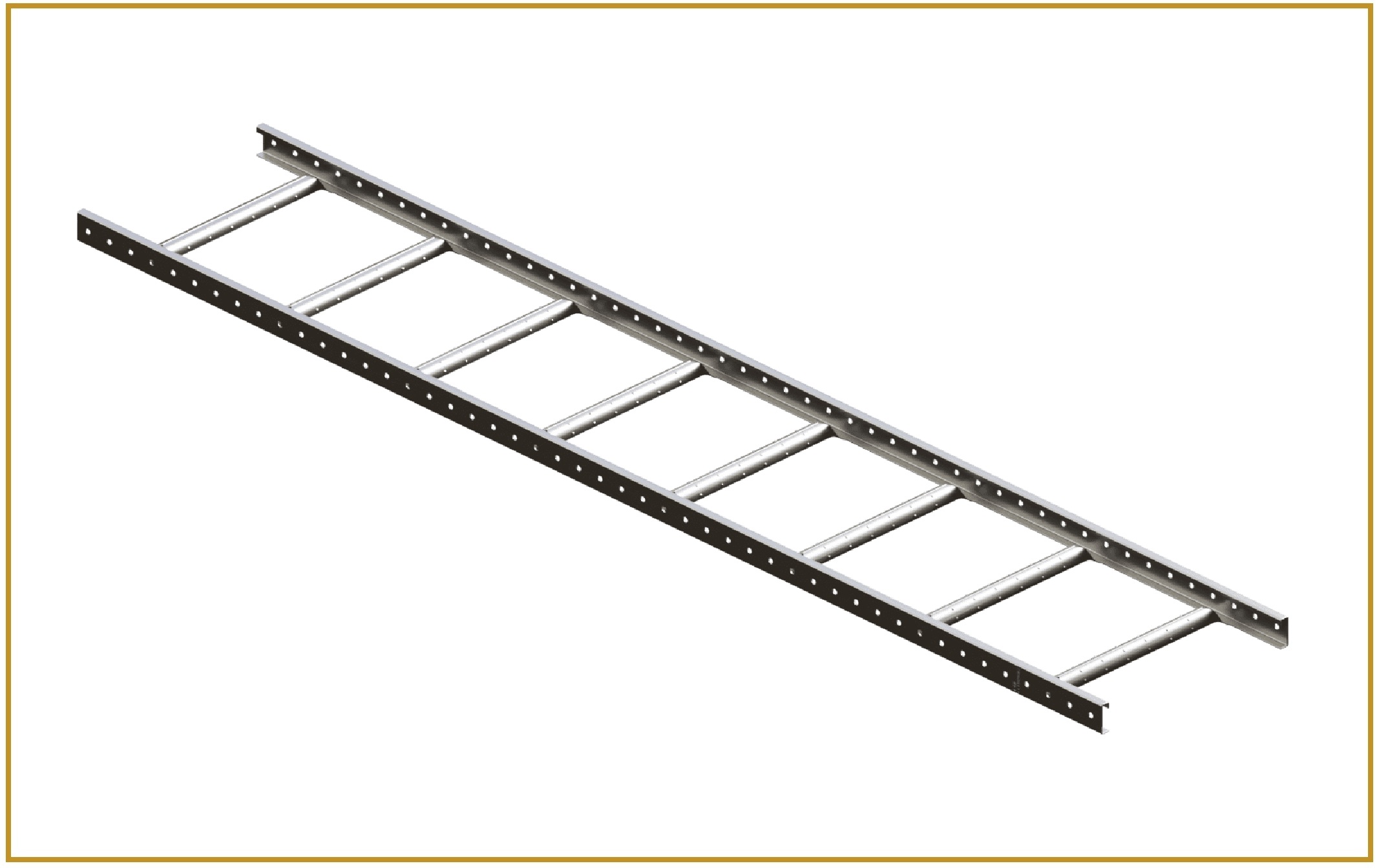
A ladder cable tray consists of two longitudinal side rails connected by regularly spaced cross rungs. Its open construction resembles a ladder and provides convenient access to cables from multiple directions.
Because the spaces between the rungs remain open, ladder trays allow substantial airflow around installed cables. Their structural design also makes them a popular choice for supporting heavier cable loads over suitable spans, provided the tray is selected according to the manufacturer's load ratings.
Key Advantages of Ladder Cable Trays
- Excellent ventilation: The open design promotes airflow around cables and supports effective heat dissipation.
- Heavy-duty applications: Appropriately rated ladder trays are well suited to many installations involving large power cables and substantial cable loads.
- Convenient cable access: The open structure simplifies inspection, cable identification, and maintenance.
- Flexible cable management: Cables can be secured to the rungs using suitable cable ties or cleats, depending on the application.
- Suitable for industrial environments: Ladder trays are commonly used in factories, power distribution areas, substations, and infrastructure projects.
Common Applications of Ladder Cable Trays
Ladder cable trays are frequently used in industrial plants, power stations, electrical substations, large commercial facilities, and outdoor cable routes. They are particularly useful when cable weight, ventilation, and maintenance accessibility are major considerations.
For project-specific options, explore BNY Metalcoat's Ladder Type Cable Trays.
Perforated vs Ladder Cable Tray: Key Differences
Both tray types provide reliable cable support when properly specified. However, their structural differences influence how they perform in different environments.
| Comparison factor | Perforated cable tray | Ladder cable tray |
|---|---|---|
| Construction | Formed metal sheet with perforations | Side rails connected by cross rungs |
| Cable support | Continuous bottom support | Support at the rungs |
| Ventilation | Good, depending on perforation design | Excellent due to open construction |
| Load handling | Suitable for light to heavy loads, depending on specifications | Often preferred for heavier cable loads |
| Cable arrangement | Useful for neat, organized cable layouts | Useful for larger cable runs and secured cable bundles |
| Maintenance | Easy access from above | Easy access from above and through the open structure |
| Typical applications | Commercial buildings, control wiring, industrial services | Power plants, substations, factories, heavy-duty installations |
| Selection priorities | Continuous support, organization, and balanced ventilation | High airflow, cable access, and structural load requirements |
1. Load-Bearing Capacity and Structural Strength
Load capacity is one of the most important factors when comparing perforated and ladder cable trays.
Perforated trays provide a continuous base that supports cables along the tray floor. They can accommodate different cable loads when the tray dimensions, material thickness, and support spacing are correctly specified.
Ladder trays are frequently preferred for heavy power cables and long cable routes because their side rails and cross rungs provide a structural arrangement suited to many heavy-duty applications.
However, the actual load capacity cannot be determined by tray type alone. Always check the manufacturer's load-span tables, the total cable weight, the expected future cable additions, and the applicable project standards before selecting a system.
2. Ventilation and Heat Dissipation
Electrical cables generate heat during operation. If heat cannot dissipate adequately, cable performance and service life may be affected.
Ladder cable trays provide extensive open space around the cables, making them a strong choice for installations where ventilation is a priority.
Perforated cable trays also allow airflow through their openings while providing continuous bottom support. Their ventilation performance depends on the percentage and arrangement of perforations, cable fill, and installation conditions.
For both systems, engineers must account for conductor size, operating current, ambient temperature, cable grouping, and applicable derating requirements. A well-ventilated tray does not eliminate the need for correct cable sizing.
3. Installation, Inspection, and Maintenance
Both cable tray systems can simplify cable installation and maintenance when properly planned.
Perforated trays offer a continuous surface that helps keep smaller cables and control wiring organized. Their base can also make it convenient to position and secure cables using compatible accessories.
Ladder trays provide open access to cable runs, making them practical for installations where large cables need to be inspected, secured, or replaced. Their rung arrangement can also simplify cable cleat placement for suitable applications.
The best choice depends on cable size, route complexity, installation height, maintenance access, and the type of cable-support accessories required.
4. Material, Finish, and Environmental Conditions
The installation environment plays an important role in determining cable tray durability.
Galvanized steel is commonly used where corrosion resistance is required, while stainless steel may be suitable for more demanding corrosive environments when the grade is selected appropriately. Powder-coated finishes, available for both perforated and ladder trays, can provide additional surface protection and a specified appearance.
Both perforated and ladder trays can be manufactured in different materials and finishes. Selection should consider moisture, chemical exposure, temperature, outdoor exposure, and compatibility with the surrounding installation.
For outdoor applications, do not assume that an open ladder tray is always the best solution. Evaluate exposure to rain, dust, falling debris, corrosion, and the need for compatible covers or additional cable protection.
Which Cable Tray Should You Choose?
The right choice depends on your project's cable load, environment, layout, and maintenance requirements.
Choose a Perforated Cable Tray If:
- Your installation requires continuous bottom support for cables.
- You need an organized layout for control, instrumentation, or suitable power cables.
- The project involves commercial buildings, industrial services, or electrical distribution routes.
- You want a balance between cable support, ventilation, and accessibility.
Choose a Ladder Cable Tray If:
- Your installation involves heavy power cables or large cable bundles.
- Excellent airflow around cables is a priority.
- The route includes long spans supported by an appropriately rated tray system.
- The installation requires convenient access for cable inspection and maintenance.
For complex installations, engineers may use both types in different areas of the same facility. For example, ladder trays may carry major power cables along primary routes, while perforated trays handle control and instrumentation wiring in equipment areas.
Factors to Consider Before Finalizing Your Cable Tray
Before purchasing a cable tray system, evaluate the following requirements:
- Cable specifications: Identify cable diameters, quantities, weights, and operating conditions.
- Load and support span: Confirm the required load capacity against manufacturer data.
- Cable fill and ventilation: Allow sufficient space for cable installation, heat dissipation, and future expansion.
- Environmental exposure: Select a suitable material and finish for indoor or outdoor conditions.
- Accessories and routing: Consider bends, tees, reducers, vertical risers, connectors, supports, and covers where required.
- Standards and safety: Follow applicable electrical codes, project specifications, and manufacturer installation instructions.
Careful planning helps reduce installation difficulties, improve maintenance access, and support the long-term reliability of the cable management system.
Conclusion
The comparison of perforated vs ladder cable tray systems comes down to the needs of your electrical installation. Perforated cable trays provide continuous bottom support and organized routing, making them a versatile option for many commercial and industrial applications. Ladder cable trays offer excellent ventilation and are often preferred for heavy power cables, larger cable runs, and demanding industrial installations.
There is no single solution that is best for every project. Evaluating cable weight, ventilation requirements, support spacing, environmental conditions, and maintenance needs will help you make an informed decision.
BNY Metalcoat Pvt. Ltd. manufactures and supplies cable management solutions, including perforated and ladder-type cable trays, for a range of commercial and industrial requirements. Explore the available perforated cable tray range and contact the team through the BNY Metalcoat website to discuss your project specifications and identify a suitable cable tray solution.
Frequently Asked Questions
Perforated cable trays have a continuous base with holes for ventilation, while ladder cable trays feature side rails connected by cross rungs. Perforated trays provide continuous cable support, whereas ladder trays offer better airflow and easy cable access.
Perforated cable trays are ideal for organized cable routing and continuous support, while ladder trays are often preferred for heavy power cables and better ventilation. The best choice depends on cable load, installation conditions, and project requirements.
Ladder cable trays are commonly preferred for heavy electrical cables because of their structural design and excellent ventilation. However, the final selection should depend on the manufacturer's load ratings and support span.
Yes, perforated cable trays can be used outdoors when manufactured with suitable corrosion-resistant materials and finishes. The selection should account for weather exposure, moisture, corrosion, and the need for additional cable protection.
Consider cable weight, ventilation, tray dimensions, support spacing, installation environment, and future expansion requirements. Selecting the right material and finish also helps ensure durability and reliable cable management.
Share your cable schedule or drawings for a project-specific recommendation
Call +91 7020753022 / +91 9067686956 or email bnymetalcoat@gmail.com
Request a Cable Tray Quote