

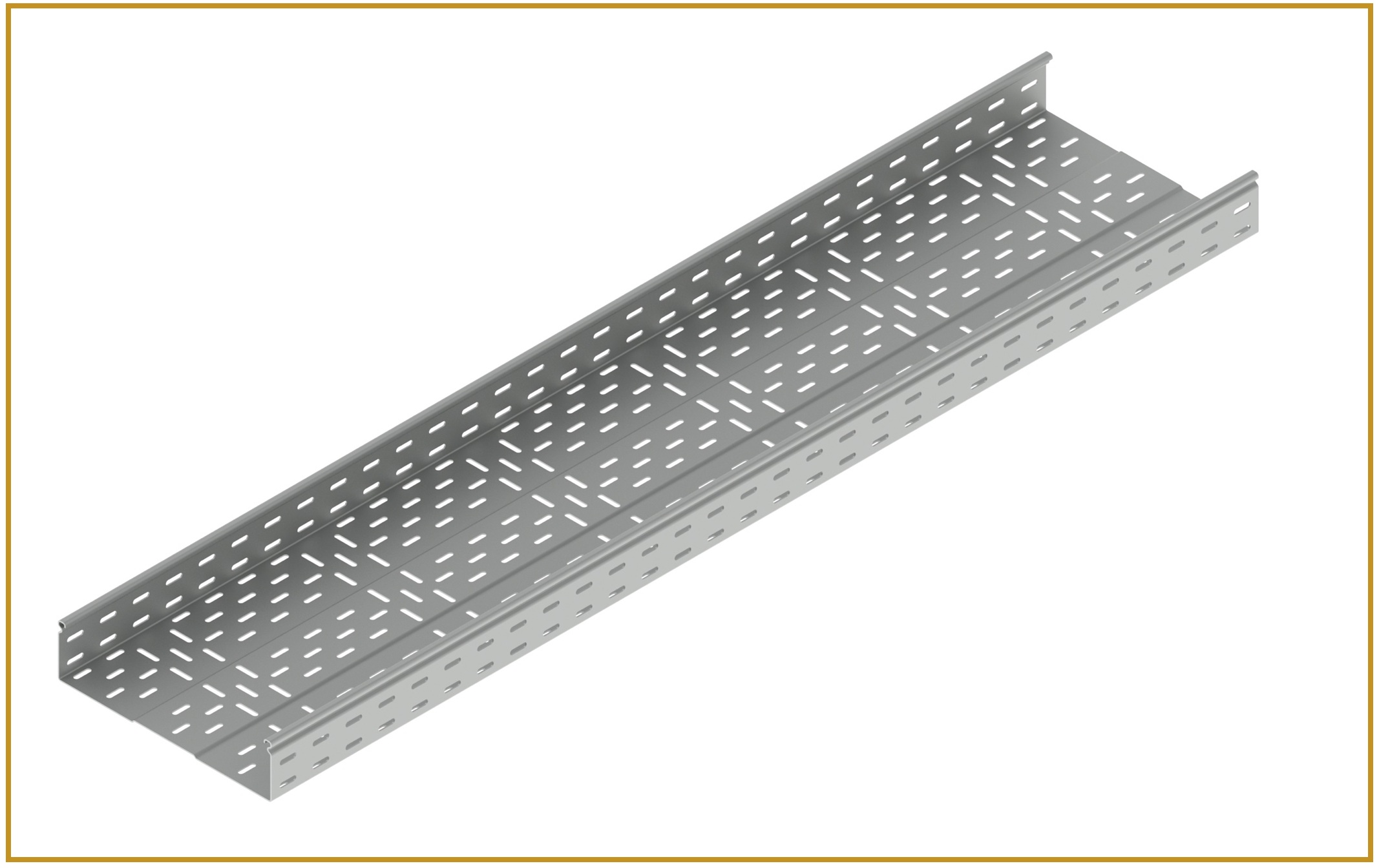
When planning an electrical installation, understanding the cable tray price is an important step in preparing an accurate project budget. Whether you are setting up a manufacturing facility, commercial building, data centre, warehouse, or infrastructure project, the right cable tray system helps organise cables, provide mechanical support, and simplify maintenance.
However, cable tray prices in India vary depending on several factors. Material, tray type, width, depth, thickness, surface finish, order quantity, accessories, and transportation can all influence the final quotation.
For procurement teams, contractors, electrical consultants, and project managers, comparing these specifications is essential before requesting a quote. A lower initial price may not always provide the best long-term value if the tray does not meet the project's load requirements or environmental conditions.
In this guide, we explain the key factors affecting cable tray cost per metre, how to compare quotations, and what information to provide to a manufacturer for accurate pricing.
In This Guide
1. What Is the Average Cable Tray Price in India?
There is no single fixed cable tray price applicable to every project. A narrow, light-duty tray made from pre-galvanized steel will generally have a different price from a wide, heavy-duty tray with a hot-dip galvanized finish.
The following factors determine the quoted price:
- Type of cable tray required
- Width and side height
- Sheet thickness and material grade
- Surface treatment and corrosion protection
- Manufacturing specifications
- Order quantity and customization
- Accessories, packaging, and delivery
For example, a 150 mm wide perforated cable tray with a 1.2 mm thickness will have different material requirements from a 600 mm wide tray with a 2 mm thickness.
2. Type of Cable Tray and Its Impact on Price
The cable tray design is one of the first factors to consider when evaluating the cable tray price per metre. Different designs serve different cable-management requirements.
Perforated Cable Tray
A perforated cable tray is manufactured from sheet metal with regularly spaced openings. Its design provides cable support while allowing ventilation.
It is commonly used in commercial buildings, factories, control rooms, and general electrical installations. The price depends on tray dimensions, sheet thickness, material, and finish.
Explore BNY Metalcoat's perforated cable trays to review available sizes and product options.
Ladder Cable Tray
A ladder cable tray consists of two side rails connected by cross rungs. Its open construction supports ventilation and convenient cable access, making it suitable for many industrial installations and heavier power-cable routes.
The cost depends on rail dimensions, rung design, material thickness, tray width, and surface treatment. See our ladder type cable trays.
Wire Mesh Cable Tray
Wire mesh cable trays feature an open welded-wire structure. They are often used for network cabling, communication systems, and data centres where flexible routing and easy cable access are useful.
Wire diameter, mesh design, dimensions, material, and finish influence the price. Learn more about wire mesh cable trays.
Solid-Bottom and Channel Cable Trays
Solid-bottom trays provide a continuous base, while channel trays are compact solutions for smaller cable bundles and shorter routes.
Their suitability and cost depend on cable requirements, dimensions, construction, and installation conditions.
Before requesting a quotation, identify the tray type that meets your application. Choosing a product solely on price without considering its intended use can lead to unnecessary expenses later.
3. Material Selection: MS, GI, Stainless Steel, and Aluminium
Material choice has a significant effect on the cable tray price in India because different materials have different costs, weights, fabrication requirements, and corrosion-resistance properties.
Mild Steel (MS)
Mild steel cable trays are commonly considered for industrial and commercial installations. Their suitability depends on the required strength, thickness, and protective finish.
Galvanized Iron (GI)
GI cable trays use zinc-coated steel for corrosion protection. They are often selected for electrical installations where the specified galvanizing system is suitable for the environment.
The precise coating specification and manufacturing process can affect the quotation.
Hot-Dip Galvanized (HDG) Steel
Hot-dip galvanized cable trays are used in applications requiring enhanced corrosion protection, including many outdoor and industrial environments.
The galvanizing specification, coating requirements, tray dimensions, and fabrication process all influence the final price.
Stainless Steel
Stainless steel cable trays may be appropriate for demanding environments where corrosion resistance is particularly important. The selected grade, such as SS304 or SS316, affects the material cost.
Aluminium
Aluminium trays offer a lightweight alternative with useful corrosion-resistance characteristics. They may be suitable where reduced structural weight or ease of handling is important.
The best material is not necessarily the least expensive one. Consider the operating environment, maintenance requirements, expected service life, and project specifications before making a selection.
4. How Width, Depth, and Thickness Affect Cable Tray Cost
The dimensions of a cable tray directly influence the amount of material required for manufacturing.
Tray Width
A wider tray generally requires more material than a narrower tray of otherwise comparable construction. Common widths include 100 mm, 150 mm, 200 mm, 300 mm, 450 mm, and 600 mm, although availability varies by product.
Select the width according to cable quantity, cable arrangement, clearance requirements, and future expansion plans.
Tray Depth
Tray depth, or side height, affects the available cable-support space and the quantity of material used. Typical options include 50 mm, 75 mm, 100 mm, and 150 mm, depending on the design.
Sheet Thickness
Thickness is another important cost factor. A thicker sheet generally uses more metal and may increase material and manufacturing costs.
Common sheet thicknesses for some metal cable tray designs include 1.2 mm, 1.5 mm, 1.6 mm, and 2 mm. The appropriate thickness must be determined from the required load capacity, support span, product construction, and applicable engineering specifications.
5. Surface Finish and Corrosion Protection
Surface finish can influence both the initial cable tray price and long-term maintenance requirements.
Common finishing options include:
- Pre-galvanized finish: Often used for suitable indoor applications.
- Hot-dip galvanizing: Considered where stronger corrosion protection is required.
- Powder coating: Provides a finished appearance and surface protection for appropriate applications. See powder-coated cable trays.
- Painted finish: May suit specified indoor installations and particular project requirements.
- Stainless steel or aluminium construction: Provides material-specific corrosion-resistance characteristics.
The right choice depends on moisture, humidity, chemical exposure, temperature, and whether the installation is indoors or outdoors.
For example, an indoor commercial project may have different finishing requirements from a coastal industrial installation. Specifying the appropriate finish at the quotation stage helps prevent costly changes during procurement or installation.
6. How Cable Tray Accessories Affect the Total Cost
The price of straight cable tray sections is only one part of the overall cable-management budget. Most installations also require fittings and support components.
Common accessories include:
- Horizontal and vertical bends
- Tees and crosses
- Reducers
- Coupler or joint plates
- Cable tray covers
- Wall brackets and support brackets
- Hangers, clamps, bolts, and fasteners
Each accessory has its own dimensions, material requirements, and fabrication costs. A route with frequent turns, branches, and elevation changes may therefore cost more than a straightforward route of the same total length.
When requesting a quote, include the required accessories in your bill of quantities (BOQ). This allows the manufacturer to provide a more complete estimate instead of pricing only the straight tray sections. Browse our cable tray accessories.
7. Order Quantity, Manufacturing, and Transportation
The total order quantity can influence the quoted rate. Larger orders may allow more efficient material purchasing, production planning, and packaging, depending on the manufacturer's capacity and order specifications.
Customized dimensions, non-standard lengths, special finishes, and project-specific fittings may require additional manufacturing work.
Transportation is another consideration. Delivery distance, shipment size, packaging requirements, unloading arrangements, and the project location can affect the total procurement cost.
For projects involving multiple locations or phased deliveries, confirm the delivery schedule and freight terms before finalising the purchase order.
8. How to Calculate the Total Cable Tray Cost
A simple way to estimate the straight-tray material cost is:
For example, assume a project requires 250 metres of cable tray and the supplier quotes ₹800 per metre for the specified straight sections.
This is an illustrative calculation, not a current market price or a BNY Metalcoat quotation.
The final project cost may also include bends, tees, reducers, covers, supports, fasteners, freight, taxes, and installation labour, depending on the quotation scope.
For accurate budgeting, confirm whether the quoted rate covers supply only or includes installation and supporting hardware.
9. How to Get an Accurate Cable Tray Price Quotation
Providing complete specifications helps manufacturers prepare more accurate quotations and reduces delays caused by repeated clarification.
Before contacting a supplier, prepare the following information:
- Tray type: Perforated, ladder, wire mesh, solid-bottom, or channel.
- Dimensions: Required width, depth, and length.
- Thickness: Specified sheet thickness or engineering requirements.
- Material: MS, GI, stainless steel, aluminium, or another approved option.
- Finish: Pre-galvanized, hot-dip galvanized, powder-coated, or another specified finish.
- Quantity: Total metres and the number of sections required.
- Accessories: Bends, tees, crosses, reducers, covers, and supports.
- Project location: Required delivery destination and schedule.
- Technical documents: BOQ, cable schedule, drawings, and applicable specifications.
If the exact tray specification has not been finalised, share the project drawings and cable details with the manufacturer. The required tray configuration can then be evaluated against the installation requirements.
10. Why Choose BNY Metalcoat for Cable Tray Requirements?
BNY Metalcoat Pvt. Ltd. manufactures and supplies cable-management products for industrial, commercial, and infrastructure applications. Its product range includes perforated cable trays, ladder trays, wire mesh trays, GI cable trays, hot-dip galvanized trays, and powder-coated options.
Buyers can explore the available cable tray products and manufacturing capabilities to identify suitable options for their projects.
When evaluating a manufacturer, consider product specifications, material quality, finish requirements, customization options, accessory availability, delivery commitments, and technical support.
A clear understanding of these factors makes it easier to compare quotations on a like-for-like basis and choose a cable tray system that meets the project's needs.
Frequently Asked Questions
The price depends on the tray type, dimensions, thickness, material, finish, quantity, and accessories. For an accurate rate, request a quotation based on your actual project specifications.
The most economical option depends on the application. A suitable pre-galvanized or mild-steel tray may be cost-effective for some indoor projects, while other environments may require enhanced corrosion protection or a different material.
Yes. Greater thickness generally increases material consumption and may increase manufacturing costs. However, the correct thickness should be selected according to the required load capacity and engineering specifications.
Not necessarily. Some quotations cover only the tray supply, while others may include accessories, supports, labour, or transportation. Always confirm the scope before comparing rates.
Visit the BNY Metalcoat website and contact the company with your tray dimensions, material, finish, quantity, accessories, and delivery location. Sharing a BOQ or project drawing can help the team prepare a more relevant quotation.
Conclusion
Understanding the cable tray price in India requires more than comparing the quoted cost per metre. Tray design, material, dimensions, thickness, corrosion protection, accessories, order quantity, and delivery arrangements all influence the final amount.
For a reliable purchasing decision, define your technical requirements first and compare quotations that cover the same specifications and supply scope. This approach helps control project costs while ensuring that the selected cable tray is appropriate for its intended application.
Planning a new installation or upgrading an existing cable-management system? Explore BNY Metalcoat's cable tray solutions and request a quotation based on your project requirements.
Send your BOQ or drawings for a project-specific quotation
Call +91 7020753022 / +91 9067686956 or email bnymetalcoat@gmail.com
Request a Cable Tray Quote