

Introduction
Preparing an accurate cable tray BOQ is an essential step in electrical project planning and procurement. Whether you are managing an industrial facility, commercial building, data centre, manufacturing plant, or infrastructure project, a well-prepared Bill of Quantities (BOQ) helps you identify the required cable tray materials, estimate project costs, compare supplier quotations, and minimize procurement errors.
A BOQ that includes only cable tray lengths may overlook important components such as bends, tees, reducers, couplers, covers, brackets, and support systems. These omissions can lead to unexpected expenses, installation delays, and repeated purchase orders.
For project engineers, EPC contractors, electrical consultants, and procurement managers, the objective is to prepare a detailed BOQ that accurately reflects the approved design and site requirements.
In this guide, BNY Metalcoat explains how to prepare a cable tray BOQ, which technical specifications to include, how to estimate quantities, and what to verify before requesting a quotation from a cable tray manufacturer.
In This Guide
What Is a Cable Tray BOQ?
A Bill of Quantities (BOQ) is a structured document listing the materials, specifications, quantities, and measurement units required for a particular project.
A cable tray BOQ identifies the complete cable management system needed to support and route electrical, control, instrumentation, and communication cables.
Depending on the project scope, it may include:
- Perforated cable trays
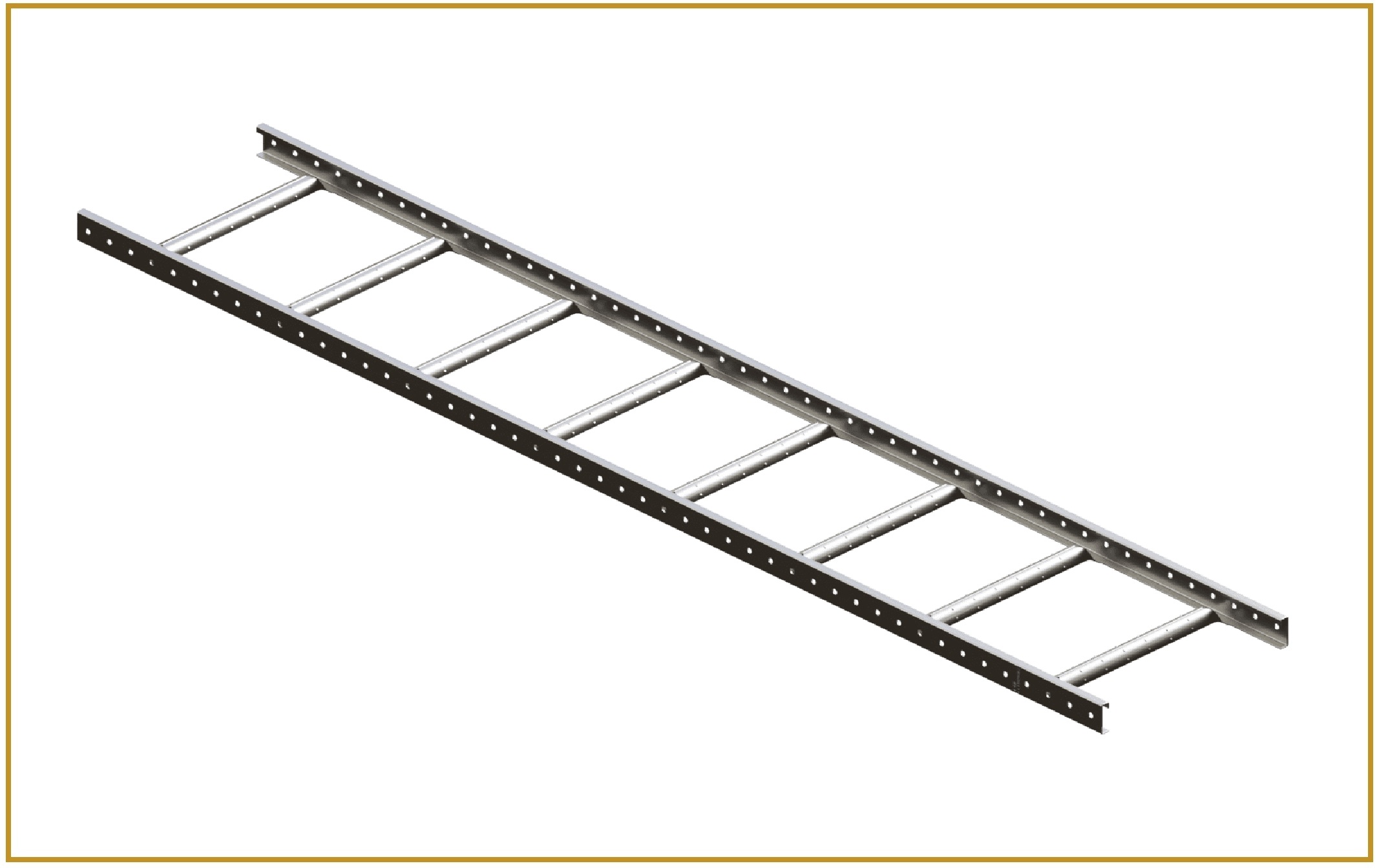
- Ladder-type cable trays
- Solid-bottom cable trays
- Wire mesh cable trays
- Cable trunking and raceways
- Horizontal and vertical bends
- Tee and cross junctions
- Reducers and end plates
- Coupler plates and connecting hardware
- Cable tray covers
- Brackets, hangers, and support assemblies
- Earthing and bonding accessories, where specified
A detailed BOQ enables buyers to request comparable quotations from manufacturers and helps project teams coordinate material supply with installation requirements.
Why Is an Accurate Cable Tray BOQ Important?
A properly prepared cable tray BOQ provides several practical advantages.
- Better cost estimation: Listing materials, dimensions, finishes, and quantities helps procurement teams obtain more accurate prices and estimate the overall cable management budget.
- Fewer material shortages: Including fittings and support accessories reduces the risk of ordering straight tray sections without the components needed to complete the installation.
- Easier quotation comparison: Standardized specifications allow buyers to compare supplier offers on a like-for-like basis rather than choosing solely on the lowest quoted price.
- Improved project planning: Accurate quantities support delivery scheduling, storage planning, installation coordination, and inventory control.
- Reduced procurement rework: Identifying technical requirements before placing an order helps prevent avoidable changes, substitutions, and additional purchases.
Step-by-Step Guide to Preparing a Cable Tray BOQ
Step 1: Review Electrical Drawings and Cable Schedules
Begin by collecting the latest approved electrical layout drawings, cable routing plans, cable schedules, and relevant project specifications.
Identify the main cable routes, vertical risers, horizontal runs, equipment connections, changes in direction, and branching points. Check whether different cable categories require separate routing or dedicated tray systems.
Measure the route lengths using the drawings or the approved design model. Where possible, verify critical dimensions against site conditions before finalizing quantities.
Step 2: Identify the Required Cable Tray Type
The tray type should be selected according to the application, cable arrangement, loading conditions, environmental exposure, and project specifications.
- Perforated cable trays: Suitable for many industrial and commercial installations where cable support and ventilation are required.
- Ladder cable trays: Commonly considered for power cable routes and installations requiring suitable load-bearing performance and accessible cable placement.
- Solid-bottom cable trays: Used where the specified design calls for a continuous base.
- Wire mesh cable trays: Often used for data, communication, and other cable management applications.
- Cable trunking and raceways: Suitable for specified routing arrangements requiring an enclosed or channel-based cable pathway.
Confirm the selected tray type with the approved engineering design rather than choosing it on price alone.
Step 3: Specify Cable Tray Dimensions
Every BOQ line item should clearly identify the required dimensions. Important parameters include:
- Tray width, in millimetres
- Side height or depth, in millimetres
- Material thickness, in millimetres
- Straight-section length
- Tray configuration and profile
For example, a requirement could specify a perforated cable tray measuring 300 mm wide, 50 mm deep, and 1.5 mm thick, with a specified finish and standard section length.
The dimensions and thickness in this example are illustrative only. Actual selection must follow the project design, loading requirements, and manufacturer's technical data.
Avoid descriptions such as “GI tray, 300 mm” because they do not adequately define the product for an accurate quotation.
Step 4: Define Material and Surface Finish
The material and finish should be selected according to the installation environment, corrosion exposure, mechanical requirements, and project specifications.
Common options include:
- Mild steel (MS)
- Pre-galvanized steel (see GI cable trays)
- Hot-dip galvanized (HDG) steel (see hot-dip galvanized cable trays)
- Stainless steel
- Aluminium
- Powder-coated steel (see powder-coated cable trays)
- Fibre-reinforced plastic (FRP/GRP), where suitable
For example, a project in a corrosive industrial environment may require a different material or protective finish from an indoor commercial installation.
Clearly state the material grade, galvanizing or coating requirements, and any applicable inspection criteria. This helps prevent suppliers from quoting products with different levels of corrosion protection.
Step 5: Calculate Straight Cable Tray Quantities
Calculate the total length of each tray type and size separately. For a simple route, use:
The calculation must follow the project's measurement convention and the geometry of the approved route.
For example, if a route measures 120 metres and 8 metres are allocated to separately measured fittings, the straight-tray requirement would be 112 metres.
If the selected tray is supplied in 3-metre sections, the theoretical requirement is approximately 38 sections, rounded up to the next whole section. This gives 114 metres of supplied tray, so the final BOQ should account for the difference between required installed length and purchased length.
Actual quantities must reflect fitting dimensions, connection arrangements, cutting requirements, and the manufacturer's available section lengths. Any allowance for cutting or wastage should be identified separately and justified rather than added arbitrarily.
Step 6: Include All Fittings and Accessories
One of the most common BOQ mistakes is counting straight trays while overlooking the fittings needed to complete the route.
Review the drawings and count each accessory individually, including:
- Horizontal bends
- Vertical bends
- Tee junctions
- Cross junctions
- Left, right, or centre reducers
- Coupler plates and clamps
- End plates
- Covers and cover connectors
- Brackets and support assemblies
- Hangers, clamps, and specified fasteners
Where applicable, record the fitting angle, radius, connecting tray width, depth, material, and finish.
Refer to the cable tray accessories range when identifying the components required for your project.
Step 7: Determine Support Requirements
Cable tray supports are essential to the stability and performance of the complete installation.
Identify the proposed support arrangement, such as wall-mounted brackets, cantilever supports, ceiling hangers, or trapeze supports. Determine support spacing from the approved engineering design and the selected tray's load data.
For a preliminary straight route, the support count can be estimated using:
This simplified calculation assumes supports at both ends of a straight run. Actual requirements depend on route geometry, fitting locations, joint positions, cantilevers, and the specified support arrangement.
Do not apply a generic support spacing to every installation. The engineer should verify cable loading, tray capacity, support span, and structural fixing requirements. Our guide on cable tray load capacity and support spacing explains how to approach these checks.
Step 8: Confirm Loading and Applicable Standards
The BOQ should reflect the cable loading and performance requirements established by the responsible design team.
Relevant considerations include cable weight, tray width, material thickness, support span, installation orientation, and future cable additions.
Specify the applicable project standard and any required test reports or compliance documentation. IEC 61537 is a relevant international standard for cable tray and cable ladder systems; projects may also specify other applicable standards.
The manufacturer’s declared load data should correspond to the actual tray configuration and support span. Do not assume that two trays with identical dimensions have identical load capacities.
Step 9: Organize the BOQ in a Clear Table
Once all measurements and specifications are confirmed, organize the information into a procurement-ready table.
| Item | Description | Key Specifications | Unit |
|---|---|---|---|
| 1 | Perforated cable tray | Width, depth, thickness, material, finish | m |
| 2 | Ladder cable tray | Width, side height, thickness, finish | m |
| 3 | Horizontal bend | Angle, radius, size, finish | No. |
| 4 | Tee junction | Branch size and configuration | No. |
| 5 | Reducer | Input/output widths and type | No. |
| 6 | Coupler plates | Compatible tray profile and size | Set |
| 7 | Cable tray covers | Size, material, finish | m or No. |
| 8 | Supports and brackets | Type, dimensions, loading requirements | No. |
| 9 | Fasteners and accessories | Material, size, specified quantity | Set or No. |
This is a sample format, not a final project quantity schedule. Add separate rows for different tray sizes, material grades, thicknesses, finishes, and fitting configurations.
Common Mistakes to Avoid When Preparing a Cable Tray BOQ
Even a well-planned project can experience procurement problems if the BOQ contains incomplete or inconsistent information. Avoid these common mistakes:
- Mentioning tray width without specifying depth or thickness.
- Mixing different tray types under one generic description.
- Omitting fittings, couplers, covers, or support accessories.
- Selecting a finish without considering the installation environment.
- Using unsupported assumptions for load capacity and support spacing.
- Applying arbitrary wastage allowances without a measurement basis.
- Ignoring cable segregation, earthing, bonding, and project-specific requirements.
- Preparing quantities from outdated drawings.
- Comparing quotations with different technical specifications.
- Failing to identify delivery requirements and required documentation.
A final review by the engineering and procurement teams can help identify these issues before the purchase order is released.
How to Get an Accurate Cable Tray Quotation from BNY Metalcoat?
A complete cable tray BOQ helps a manufacturer understand the project's requirements and prepare a more relevant quotation.
BNY Metalcoat Pvt. Ltd. manufactures and supplies cable management products, including perforated cable trays, ladder-type cable trays, wire mesh cable trays, raceways, GI cable trays, and associated accessories.
For a faster procurement review, share the following information:
- BOQ with item descriptions and quantities
- Approved drawings or cable routing layouts
- Required tray types and dimensions
- Material and surface finish
- Cable loading and support requirements, where available
- Accessory and fitting schedule
- Project location and delivery requirements
- Applicable standards and documentation requirements
Visit the BNY Metalcoat cable tray product page to explore the available cable tray options. You can also review the perforated cable tray specifications and cable tray accessories for further product information.
If some technical details are not finalized, share the available drawings and preliminary BOQ for discussion. Final quantities and specifications should be confirmed against the approved design before procurement.
Wondering whether to source from a manufacturer or a dealer? Read our comparison of a cable tray manufacturer vs trader.
Conclusion
Preparing an accurate cable tray BOQ involves more than measuring the total cable route. It requires a systematic review of drawings, tray types, dimensions, materials, surface finishes, fittings, supports, loading requirements, and project documentation.
A detailed BOQ improves cost estimation, supports transparent quotation comparisons, reduces material shortages, and helps procurement teams coordinate deliveries more efficiently.
Whether you are an EPC contractor, electrical consultant, project engineer, or industrial buyer, investing time in a clear cable tray BOQ can make the procurement process more predictable and organized.
Frequently Asked Questions
A cable tray BOQ should include tray type, width, depth, thickness, material, surface finish, quantity, and measurement unit. It should also list fittings, covers, couplers, supports, fasteners, and applicable technical requirements.
Measure the cable tray routes using approved electrical drawings and divide the quantities by tray type, size, and finish. Account separately for fittings and calculate the number of standard tray sections required based on the manufacturer's available lengths.
The key specifications include tray dimensions, material thickness, material grade, surface finish, load capacity, support span, fitting configuration, and applicable standards. These details help suppliers provide technically comparable quotations.
Yes. Include bends, tees, crosses, reducers, couplers, covers, end plates, brackets, hangers, and specified fasteners. The exact accessories depend on the approved routing layout and installation requirements.
Material selection influences corrosion resistance, mechanical performance, suitability for the installation environment, and overall cost. Options such as pre-galvanized steel, hot-dip galvanized steel, stainless steel, aluminium, and FRP/GRP should be evaluated against project requirements.
Prepare a detailed BOQ with quantities and technical specifications, then share it with the manufacturer. Providing approved drawings, cable schedules, accessory requirements, delivery location, and applicable standards can help reduce quotation delays and technical clarifications.
Yes. You can share your preliminary BOQ, cable schedule, or drawings for an initial review. However, missing dimensions, finishes, load requirements, and other critical specifications should be confirmed before the final quotation and purchase order.
Visit BNY Metalcoat or use the cable tray manufacturer page to explore product options and request a quotation. Share your BOQ, drawings, required quantities, and technical specifications to discuss your project requirements.
Share your BOQ, cable schedule or drawings for a project-specific quotation
Call +91 7020753022 / +91 9067686956 or email bnymetalcoat@gmail.com
Request a Cable Tray Quote