

Introduction
Modern electrical infrastructure depends on safe, organized, and reliable cable management. From large-scale solar power plants to high-performance data centers and manufacturing facilities, cables connect essential equipment and support uninterrupted operations. Without a well-planned routing system, cables can become difficult to manage, inspect, and maintain.
This is where cable tray systems play an important role. They provide structured pathways for supporting and routing power cables, control cables, instrumentation wiring, and communication networks. Selecting the right cable tray helps improve accessibility, simplify maintenance, and accommodate future infrastructure expansion.
At BNY Metalcoat Pvt. Ltd., cable tray solutions include perforated cable trays, ladder cable trays, wire mesh cable trays, GI cable trays, and other cable management products for industrial, commercial, and infrastructure applications.
Understanding the specific requirements of each installation is essential when choosing a cable tray for solar projects, data centers, and industrial plants.
In This Guide
Why Are Cable Tray Systems Important?
Cable trays are structural support systems designed to organize cables along predetermined routes. They help maintain orderly installations while providing convenient access for inspection, maintenance, and cable additions.
Compared with unstructured cable routing, a properly designed cable tray system offers several practical benefits:
- Organized cable routing: Separates and arranges cables according to their purpose and installation requirements.
- Improved accessibility: Makes inspection, troubleshooting, and maintenance more convenient.
- Efficient space utilization: Supports overhead and designated cable routes, helping reduce congestion.
- Better ventilation: Open tray designs can support airflow around cables when installed according to applicable requirements.
- Flexible installation: Bends, tees, reducers, and other accessories allow cable routes to follow the building or plant layout.
- Future expansion: Properly planned tray capacity can accommodate additional cables as infrastructure requirements change.
The correct tray type, material, dimensions, and support spacing should be determined according to cable loads, environmental conditions, applicable standards, and project specifications. Our guide on cable tray load capacity and support spacing explains how to check these.
Cable Tray for Solar Power Plants
Solar power installations require dependable cable routing across photovoltaic arrays, inverter stations, combiner boxes, and electrical distribution equipment. Cables may be exposed to sunlight, rain, dust, temperature variations, and other outdoor conditions.
A suitable cable tray for solar applications helps organize these cable routes and provides structural support throughout the installation.
Key Applications in Solar Projects
Cable tray systems can be used for:
- Routing DC cables between photovoltaic array sections and combiner boxes.
- Supporting AC power cables connecting inverters to distribution equipment.
- Managing control and monitoring cables.
- Organizing auxiliary power and communication wiring.
- Connecting electrical equipment across designated plant routes.
Which Cable Tray Is Suitable for Solar Installations?
Ladder cable trays can be considered for heavier power cables and routes requiring good ventilation. Perforated cable trays provide a continuous supporting base with openings for airflow. GI and hot-dip galvanized steel options may be suitable where corrosion protection is required, subject to the site environment and project specifications.
Material selection is especially important for outdoor solar installations. The tray and its protective finish should be appropriate for moisture, UV exposure, dust, temperature changes, and any coastal or corrosive conditions.
Installers should also account for cable bend radii, support spacing, earthing and bonding requirements, and the movement of cables caused by environmental conditions.
Cable Tray for Data Centers
Data centers depend on reliable power distribution and high-performance communication networks. Their infrastructure includes servers, switches, storage systems, UPS equipment, power distribution units, and cooling systems. These components require carefully organized electrical and data cabling.
A well-designed cable tray for data center installations helps maintain structured cable pathways, supports efficient maintenance, and makes future network expansion easier.
Cable Management Requirements in Data Centers
Data center environments often have high cable densities and limited installation space. Cable routing must be planned to support accessibility, airflow, equipment servicing, and clear identification of different cable systems.
Wire mesh cable trays are frequently considered for network cabling, fiber-optic cables, and communication wiring because their open construction supports ventilation and convenient access. Perforated trays may also be suitable for selected power and control cable routes.
Ladder cable trays can be used for appropriate heavy-duty power distribution routes, depending on cable weight and support requirements.
Benefits of Choosing the Right Data Center Cable Tray
- Structured network cabling: Helps organize fiber-optic, copper, and communication cables.
- Improved accessibility: Makes tracing, inspecting, and replacing cables easier.
- Support for airflow planning: Open designs can help preserve airflow around cable routes, although tray placement and cable density must also be considered.
- Scalable infrastructure: Allows planned additions and changes as server capacity increases.
- Reduced cable congestion: Helps maintain orderly pathways above racks, in service corridors, and in designated technical spaces.
Power cables and sensitive communication cables should be routed with appropriate separation wherever required by design standards and equipment specifications. Tray loading, bend radii, cable segregation, fire safety, and electromagnetic compatibility should also be considered.
Cable Tray Solutions for Industrial Plants
Industrial facilities operate a wide range of equipment, including motors, conveyors, pumps, control panels, production machinery, and automated systems. These operations depend on organized power, instrumentation, and control wiring.
Industrial cable tray systems help route cables across production areas, equipment rooms, electrical substations, and utility sections while maintaining accessible and manageable installations.
Common Industrial Applications
Cable trays are used in:
- Manufacturing and assembly plants.
- Chemical and pharmaceutical facilities.
- Power generation plants and substations.
- Warehouses and logistics facilities.
- Water and wastewater treatment plants.
- Process industries and infrastructure projects.
Selecting Cable Trays for Industrial Environments
Different industrial environments require different cable management approaches.
Ladder cable trays are useful for suitable heavy-duty power cable routes because their open construction supports ventilation and access. Perforated cable trays provide continuous cable support and are suitable for many general power and control wiring applications. Solid-bottom trays can be considered where a continuous base is required, subject to cable type, environmental conditions, and design needs.
Material selection is equally important. Galvanized steel may be suitable for many industrial installations, while hot-dip galvanized steel or stainless steel can be considered for more demanding corrosion conditions. FRP/GRP systems may be appropriate in selected chemical or highly corrosive environments.
Industrial projects should evaluate vibration, mechanical damage risks, chemical exposure, operating temperatures, cable loads, and maintenance access before finalizing the tray configuration.
Types of Cable Trays for Different Applications
Choosing the appropriate cable tray begins with understanding the advantages and limitations of each design.
1. Perforated Cable Tray
Perforated trays feature openings in the base and sides, providing cable support and ventilation. They are commonly used in commercial buildings, industrial facilities, and selected solar and power installations.
2. Ladder Cable Tray
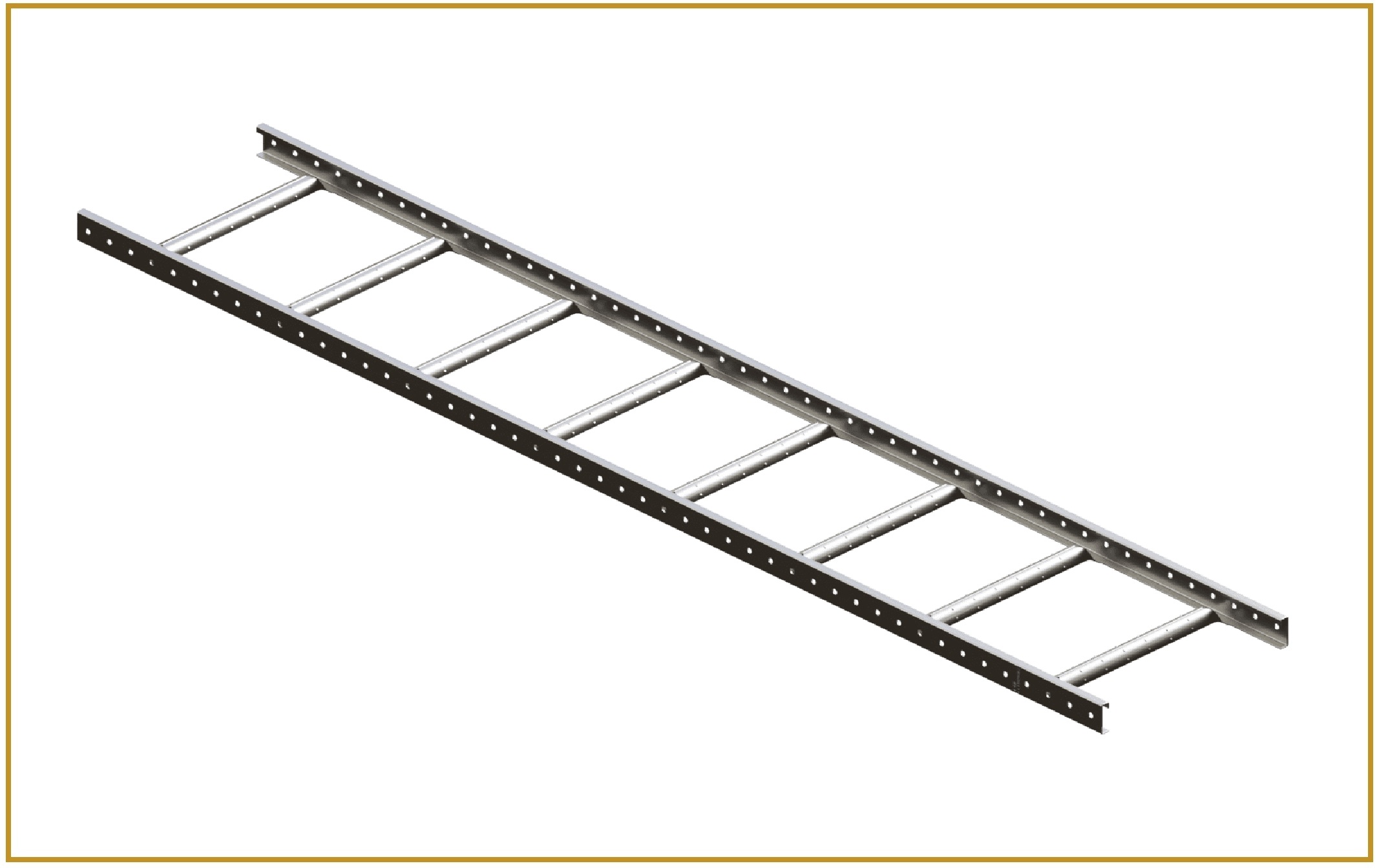
Ladder trays consist of two side rails connected by cross rungs. They are suitable for many heavy-duty cable routes and applications requiring ventilation and convenient cable access.
3. Wire Mesh Cable Tray
Wire mesh trays have an open welded-wire construction. They are particularly useful for structured data cabling, communication networks, and fiber-optic installations where accessibility and flexible routing are important.
4. GI and Hot-Dip Galvanized Cable Tray
Galvanized steel trays provide a protective zinc coating to help resist corrosion. The appropriate galvanizing process and coating specification depend on the intended environment and project requirements.
5. Stainless Steel Cable Tray
Stainless steel trays can be considered for installations exposed to moisture, chemicals, or demanding hygiene requirements. The correct grade should be selected according to the specific exposure conditions.
For product comparisons, visit BNY Metalcoat's Cable Tray Product Range.
How to Choose the Right Cable Tray System?
Selecting a cable tray involves more than choosing a particular size or material. The system should be evaluated against the project's electrical, mechanical, environmental, and operational requirements. Consider the following factors:
- Cable type and quantity: Identify power, control, instrumentation, communication, and fiber-optic cables.
- Cable loading: Calculate the expected cable weight and account for applicable load requirements.
- Tray dimensions: Select the width and side height based on cable quantity, arrangement, fill requirements, and future expansion.
- Support spacing: Ensure the tray and support structure can handle the design load over the intended span.
- Installation environment: Evaluate indoor or outdoor exposure, moisture, corrosion, temperature, dust, and chemicals.
- Tray material and finish: Select galvanized steel, stainless steel, aluminium, or another suitable material according to the application.
- Accessories and routing: Include bends, tees, reducers, couplers, covers, brackets, and supports where needed. See cable tray accessories explained for how each fitting is used.
- Compliance and maintenance: Verify applicable electrical codes, project specifications, bonding requirements, and inspection access.
A well-planned system can improve installation quality while making future maintenance and expansion more manageable.
Why Choose BNY Metalcoat for Cable Tray Solutions?
BNY Metalcoat Pvt. Ltd. manufactures cable trays, raceways, and electrical support systems for industrial, commercial, and infrastructure projects. Its product range includes perforated cable trays, ladder cable trays, wire mesh trays, GI trays, hot-dip galvanized trays, stainless steel trays, and powder-coated options.
The company offers solutions for different cable management requirements, with product configurations selected according to project specifications.
When planning a solar installation, data center, or industrial facility, customers can share their bill of quantities (BOQ), cable schedule, drawings, or technical specifications to help determine suitable tray types and dimensions. Our step-by-step guide on how to prepare a BOQ for cable tray procurement can help you organize this information.
A complete cable management plan should account for the trays, fittings, supports, cable loads, installation environment, and future requirements rather than treating each component as an isolated purchase.
Visit BNY Metalcoat to explore its cable tray products and application-oriented solutions.
Conclusion
Cable tray systems are an essential part of reliable electrical infrastructure. Solar power plants require durable cable routing for outdoor electrical networks, data centers need structured pathways for power and communication cables, and industrial plants depend on organized routes for machinery, automation, and control systems.
Selecting the right cable tray for solar, data center, and industrial applications involves evaluating cable loads, tray design, material, corrosion protection, ventilation, support spacing, and future expansion.
By matching the tray configuration to the project's requirements, businesses can build more organized, accessible, and maintainable cable management systems.
Frequently Asked Questions
The best option depends on cable loads, outdoor exposure, corrosion risks, and installation layout. Ladder trays may suit heavier power cables, while perforated trays can support many general cable routes. Galvanized or other corrosion-resistant materials should be selected according to site conditions.
Wire mesh cable trays are commonly considered for network and fiber-optic cables because they offer accessibility and an open structure. Perforated and ladder trays may be suitable for other cable systems, depending on their loads and routing requirements.
Perforated cable trays have a continuous base with openings, offering cable support and ventilation. Ladder cable trays have two side rails joined by rungs, providing an open structure that is often suitable for heavier cable routes and convenient access.
GI cable trays can be suitable for certain outdoor applications, depending on the coating, environment, and project requirements. More demanding conditions may require hot-dip galvanizing, stainless steel, or another appropriately specified corrosion-resistant solution.
Consider the number and outside diameter of the cables, their arrangement, applicable fill requirements, cable weight, and provision for future expansion. The final tray width and depth should also satisfy loading, bending-radius, thermal, and project-specific requirements.
Yes, cable tray systems can support power and data cables, but their routing and separation must follow applicable codes, equipment requirements, and electromagnetic compatibility considerations. Separate trays or suitable segregation may be necessary.
Cable tray pricing depends on the tray type, dimensions, material thickness, surface finish, order quantity, fittings, supports, customization, and transportation. Providing a BOQ or technical drawing helps suppliers prepare a more accurate quotation.
Accessories such as bends, tees, reducers, couplers, covers, brackets, and supports help create continuous cable routes and accommodate changes in direction or elevation. Correctly selected accessories also contribute to mechanical stability, accessibility, and installation quality.
Share your BOQ, cable schedule or drawings for a project-specific recommendation
Call +91 7020753022 / +91 9067686956 or email bnymetalcoat@gmail.com
Request a Cable Tray Quote